Edward Fudge, Robert Peterson, and the Ignoratio Elenchi Fallacy

In 2000 a book was published in which Edward Fudge and Robert Peterson conducted a debate over the question of whether the Bible supports CI (conditional immortality) or ECT (eternal conscious torment).1Edward William Fudge and Robert A. Peterson, Two Views of Hell: A Biblical & Theological Dialogue, Kindle ed., (InterVarsity Press: 2000). The image at the top of this article is from the Kindle edition of the book I own. I am not intending to review the entire exchange between Peterson and Fudge. Rather, I will focus on three responses Peterson made to the following statement by Fudge.

The word punishment tells us that the destiny of the lost issues from a judicial sentence. They are sent away to this fate. The word punishment does not tell us the nature of the penalty, however, or of what it actually consists. In our own criminal justice system punishment has a wide variety of meanings. It might mean a monetary fine or perhaps a brief time in jail or even a life sentence to prison. The worst punishment of all, however, is capital punishment—although the actual act of execution lasts only a few minutes at most. We do not measure capital punishment by the time required to carry it out but in terms of its lasting consequences. We consider it the greatest punishment of all because it forever deprives its victims of the remainder of their anticipated lives.

Saint Augustine, whose endorsement of the traditional view of conscious, unending torment practically guaranteed its status as orthodox doctrine, had to admit that this is true of capital punishment. “Where a very serious crime is punished by death and the execution of the sentence takes only a minute, no laws consider that minute as the measure of the punishment but rather the fact that the criminal is forever removed from the community of the living.” In this light it will not surprise us to learn that the word translated “punishment” in Matthew 25 originally meant “to cut short.” By the time of Jesus it also meant “to prune” or “to cut down.” The Old Testament uses this word at times to describe punishment by death (1 Sam 25:31; Ezek 21:15).

This punishment is called “eternal” for two reasons. First, it is the punishment of the age to come, not a punishment meted out by either man or God in this present life. Second and more importantly, it is called “eternal” because it will last forever, as the apostle Paul later specifically details. When Jesus comes at the end of the world, Paul explains, he will punish the wicked with “everlasting destruction” (2 Thess 1:9). Once destroyed, they will be gone forever. Jesus mentions in Matthew 25 the fate of the wicked in the most general of terms (eternal punishment), but Paul tells us its specific nature (everlasting destruction). Even Jonathan Edwards, whose name is best known today for his vivid preaching about the torments of hell, concedes that irreversible extinction would properly be called “eternal punishment.”2Edward Fudge, ‘The Case for conditionalism’, in Two Views of Hell: A Biblical & Theological Dialogue, Kindle ed., (InterVarsity Press: 2000), Kindle loc., 666-685.

The main point Fudge is making here is the word ‘punishment’ is ambiguous: ‘The word punishment does not tell us the nature of the penalty, however, or of what it actually consists.’ The idea is, one cannot simply assume that the mere use of the word ‘punishment’ (κόλασις, kolasis) necessarily denotes the notion of experienced punishment even where that punishment is said to be eternal and so is everlasting. On at least three occasions during his response to this section of Fudge’s argument, Peterson went on tangents that do not at all address the main point of his interlocutor.

First, Peterson takes aim at Fudge’s brief discussion on how capital punishment is perceived in legal contexts.

He adds faulty logic to faulty linguistics when he draws a parallel from the criminal justice system to eternal destinies. He correctly points out that capital punishment is a worse punishment than life in prison. But he errs when he infers that because capital punishment is worse than life imprisonment so also annihilation is a worse punishment than eternal conscious torment (p. 45). This is absurd. I would rather spend life in prison than be executed. But who would choose everlasting torment over extinction of being? Annihilation means the end of suffering, not the worst possible punishment as Fudge insists.3Robert A. Peterson, ‘A Traditionalist Response to Conditionalism’, in Two Views of Hell: A Biblical & Theological Dialogue, Kindle ed., (InterVarsity Press: 2000), Kindle loc., 1581-1586.

Fudge did not mention his personal view regarding which punishment would feel worse to him personally. He was also not attempting to argue that eternal death or annihilation is a worse punishment than everlasting torment. Rather, Fudge’s contention was that the severity of a punishment is measured in terms of its lasting consequences. Peterson’s response misses this entirely. Instead, he moves to the question of whether everlasting torment is a worse punishment than extinction of being. He asks whether anyone would choose everlasting torment over extinction and then asserts that annihilation is the end of suffering so cannot be the worst possible punishment. There are ways in which one can respond to Peterson, such as pointing out Augustine’s comment that he knew of people who would choose eternal life in torment over extinction.4‘And truly the very fact of existing is by some natural spell so pleasant, that even the wretched are, for no other reason, unwilling to perish; and, when they feel that they are wretched, wish not that they themselves be annihilated, but that their misery be so. Take even those who, both in their own esteem, and in point of fact, are utterly wretched, and who are reckoned so, not only by wise men on account of their folly, but by those who count themselves blessed, and who think them wretched because they are poor and destitute—if any one should give these men an immortality, in which their misery should be deathless, and should offer the alternative, that if they shrank from existing eternally in the same misery they might be annihilated, and exist nowhere at all, nor in any condition, on the instant they would joyfully, nay exultantly, make election to exist always, even in such a condition, rather than not exist at all. The well-known feeling of such men witnesses to this. For when we see that they fear to die, and will rather live in such misfortune than end it by death, is it not obvious enough how nature shrinks from annihilation? And, accordingly, when they know that they must die, they seek, as a great boon, that this mercy be shown them, that they may a little longer live in the same misery, and delay to end it by death. And so they indubitably prove with what glad alacrity they would accept immortality, even though it secured to them endless destruction.’ This statement is from chapter 11 of Augustine’s City of God. It can be found here. However, my purpose here is to draw attention to how Peterson’s response fails to interact with Fudge’s argument at all. Regardless of what kind of punishment people might choose or the fact that extinction would end a person’s suffering, it is still true that permanent death and extinction has eternal consequences. It is still true that the severity of a punishment is measured by its lasting consequences and not the time taken to execute it. As such, Peterson’s lack of engagement with Fudge’s main argument means he merely side-stepped it.

Peterson also takes aim at Fudge’s comment about the meaning of κόλασις (kolasis) as ‘to cut short’, ‘to prune’, or ‘to cut down’. The reader may be surprised that I agree with Peterson’s denial that κόλασις (kolasis) had these meanings. Having investigated the claim, I came to the same conclusion as Peterson. Fudge’s claim about the meaning of κόλασις (kolasis) has no evidence to support it. Notwithstanding this, if one notes that Fudge’s comment is an aside that adds nothing to his main argument, then Peterson’s efforts at debunking Fudge on this claim does nothing to show the main argument of the paragraph is also false. Worse still, Peterson speculates about why Fudge mentioned the definition of κόλασις (kolasis).

The implications of Fudge’s argument are obvious. Because punishment originally meant “to cut short,” “eternal punishment” in Matthew 25:46 means an eternal cutting short, that is, annihilation. Because the same word is used in the Old Testament to describe punishment by death, “eternal punishment” in Matthew 25:46 means an eternal death, that is, annihilation.5Peterson, ‘A Traditionalist Response to Conditionalism’, Kindle loc., 1598-1602.

However, when read in context, it is clear that Fudge added the aside about the meaning of κόλασις (kolasis) because pruning or cutting are actions that take a moment yet can have enduring consequences. Peterson not only quibbles with an aside, but he also focuses on an argument that Fudge never had in mind – all while leaving the main argument unaddressed.

Finally, there is Peterson’s interaction with Fudge’s quote of Johnathan Edwards.

Jonathan Edwards on annihilation and eternal punishment. Fudge claims that Jonathan Edwards called annihilation eternal punishment. He writes, “Even Jonathan Edwards, whose name is best known today for his vivid preaching about the torments of hell, concedes that irreversible extinction would properly be called ‘eternal punishment’” (p. 46).

Anyone familiar with Jonathan Edwards’s views on hell knows that Fudge has made a mistake. I say this for two reasons. First, in his writings Edwards repeatedly affirms traditionalism and condemns annihilationism. Although I demonstrate this on pages 123-24, here I offer further evidence…..6Peterson, ‘A Traditionalist Response to Conditionalism’, Kindle loc., 1408-1415.

Peterson goes on to discuss in more detail why Edwards affirmed traditionalism and rejected annihilationism. Along the way, Peterson mistakes Edward’s comment “So this scheme overthrows itself” as a comment on annihilationism.7Peterson, ‘A Traditionalist Response to Conditionalism’, Kindle loc., 1430-1435. However, as Glenn Peoples points out, Peterson mistakenly read this as a comment on annihilationism when Edwards clearly had universalism in his sights.8The reader can read paragraphs 31 and 32 from Edwards’ work here to check how Peterson erred at this juncture. Fudge had already made it clear that Edwards was a traditionalist who ‘is best known today for his vivid preaching about the torments of hell’. His only point in citing Edwards was to show that even a traditionalist stalwart like Edwards could openly admit that a punishment of extinction fits the biblical language of ‘eternal punishment’. As such, Peterson’s response on this point is completely irrelevant.

When I first read Peterson’s response to Fudge in this book several years ago it appeared to me that he had his interlocutor’s measure. Peterson is so sure that Fudge erred that his certitude affected my perception of the strength of his rebuttal. On closer examination, it became clear to me that Peterson had not, in fact, interacted with Fudge’s main argument. To be sure, he had circled around it, firing arrows at peripheral issues. However, even as Peterson proved to be correct that Fudge had erred on the meaning of κόλασις (kolasis) he had only hit on an ancillary point made in that paragraph. Peterson had missed the main point, and this is why I eventually concluded he lost the debate to Fudge over what Matthew meant by ‘eternal punishment’. He erroneously continued to use the phrase ‘eternal punishment’ as if it could only be understood as meaning ‘everlasting punishing by torment’. This is just a small window into why conditionalists are generally unpersuaded by Peterson’s case against CI. Glenn Peoples has identified other fallacies utilized by Peterson in his interaction with Fudge’s argument.9Glenn has links to his original journal article, Peterson’s response to that article, and his rejoinder to Peterson, https://www.rightreason.org/articles/ I strongly encourage the reader to check out Glenn’s interaction with Peterson’s arguments, for he gives more reasons for why Peterson ultimately failed to rebut Fudge’s case for CI. This will show you why the Rethinking Hell team does not think Peterson’s case against CI is persuasive.


References
1 Edward William Fudge and Robert A. Peterson, Two Views of Hell: A Biblical & Theological Dialogue, Kindle ed., (InterVarsity Press: 2000). The image at the top of this article is from the Kindle edition of the book I own.
2 Edward Fudge, ‘The Case for conditionalism’, in Two Views of Hell: A Biblical & Theological Dialogue, Kindle ed., (InterVarsity Press: 2000), Kindle loc., 666-685.
3 Robert A. Peterson, ‘A Traditionalist Response to Conditionalism’, in Two Views of Hell: A Biblical & Theological Dialogue, Kindle ed., (InterVarsity Press: 2000), Kindle loc., 1581-1586.
4 ‘And truly the very fact of existing is by some natural spell so pleasant, that even the wretched are, for no other reason, unwilling to perish; and, when they feel that they are wretched, wish not that they themselves be annihilated, but that their misery be so. Take even those who, both in their own esteem, and in point of fact, are utterly wretched, and who are reckoned so, not only by wise men on account of their folly, but by those who count themselves blessed, and who think them wretched because they are poor and destitute—if any one should give these men an immortality, in which their misery should be deathless, and should offer the alternative, that if they shrank from existing eternally in the same misery they might be annihilated, and exist nowhere at all, nor in any condition, on the instant they would joyfully, nay exultantly, make election to exist always, even in such a condition, rather than not exist at all. The well-known feeling of such men witnesses to this. For when we see that they fear to die, and will rather live in such misfortune than end it by death, is it not obvious enough how nature shrinks from annihilation? And, accordingly, when they know that they must die, they seek, as a great boon, that this mercy be shown them, that they may a little longer live in the same misery, and delay to end it by death. And so they indubitably prove with what glad alacrity they would accept immortality, even though it secured to them endless destruction.’ This statement is from chapter 11 of Augustine’s City of God. It can be found here.
5 Peterson, ‘A Traditionalist Response to Conditionalism’, Kindle loc., 1598-1602.
6 Peterson, ‘A Traditionalist Response to Conditionalism’, Kindle loc., 1408-1415.
7 Peterson, ‘A Traditionalist Response to Conditionalism’, Kindle loc., 1430-1435.
8 The reader can read paragraphs 31 and 32 from Edwards’ work here to check how Peterson erred at this juncture.
9 Glenn has links to his original journal article, Peterson’s response to that article, and his rejoinder to Peterson, https://www.rightreason.org/articles/

Why I Think Universalists Misunderstand Isaiah 45:23 and Philippians 2:10-11

By myself I have sworn; from my mouth has gone out in righteousness a word that shall not return: ‘To me every knee shall bow, every tongue shall swear allegiance.’ “Only in the LORD, it shall be said of me, are righteousness and strength; to him shall come and be ashamed all who were incensed against him.1Unless otherwise indicated, all passages cited will be from the ESV; when citing a passage from the LLX the hyperlink will be for the ESV so I will provide the translation for the LXX in the endnotes. The LXX translation will be NETS, Albert Pietersma and Benjamin G. Wright, eds., A New English Translation of the Septuagint (Primary Texts), (Oxford University Press, 2007).

Isaiah 45:23-24

Therefore God has highly exalted him and bestowed on him the name that is above every name, so that at the name of Jesus every knee should bow, in heaven and on earth and under the earth, and every tongue confess that Jesus Christ is Lord, to the glory of God the Father.

Philippians 2:9-11

One of the most important Old Testament texts about salvation for the Gentiles is Isaiah 45:20-25. It clearly reflects a post judgment salvation for the nations.

Gregory MacDonald2Gregory MacDonald, The Evangelical Universalist: The Biblical Hope that God’s Love Will Save Us All, 2nd ed., (Wipf and Stock: 2012), 67.

Isaiah tells us in chapter forty–five that God says to look unto him to be saved. It goes on to say, he has sworn by himself that every knee should bow, and every tongue swear. This is God’s oath to save every bowed (subjection) knee to swear allegiance to Jesus.

Carroll D. Timothy3Timothy D. Carroll, Christ—The Original Matrix: God Face-to-Face, Kindle ed. (Resource Publications: 2020), Kindle locations, 1440-1449.

A careful consideration of the context of Isaiah 45:23 which Paul cited in Philippians 2:11 makes it clear that he meant to convey the truth that someday all will have bowed to Christ, confessing Him as Lord.

George Sidney Hurd

Other than Robin Parry (aka, Gregory MacDonald) and George Sidney Hurd, universalists do not seem to do more than cite Isaiah 45:23-24 to simply conclude it supports universalism. Many do not even mention these verses, despite the fact they are the OT source text for one of the more popular universalist proof texts: Philippians 2:10-11. To a certain extent, this is understandable. After all, does not Paul plainly say that all will swear allegiance to God?

What about Isaiah 45:24? Does that verse not indicate those who have been angry towards God will be ashamed? Would that not indicate that not all will swear allegiance to God? Robin Parry thinks not. Parry would say ‘When they turn away from idols to Yahweh as the one true God, they do so because they are ashamed of their past.’4MacDonald, The Evangelical Universalist, 69. The point is people could very well be ashamed for their past sins while submitting to God in worship. That is, I think, a decent reply. However, exploring the way that the theme of shame is utilized in Isaiah may shed a different light on the subject.

The theme of shame has already appeared in Isaiah 45:14.

Thus says the LORD: “The wealth of Egypt and the merchandise of Cush, and the Sabeans, men of stature, shall come over to you and be yours; they shall follow you; they shall come over in chains and bow down to you. They will plead with you, saying: ‘Surely God is in you, and there is no other, no god besides him.'”

The language of ‘come over to you’, ‘be yours’, ‘follow you’, and ‘bow down to you’ has led several commentators to think the statement that ‘they shall come over in chains’ connotes a voluntary surrender.5e.g. John N. Oswalt, The Book of Isaiah, Chapters 40–66, (William. B. Eerdmans Publishing: 1998), 215; Carl Friedrich Keil and Franz Delitzsch, Commentary on the Old Testament, vol. 7 (Peabody: 1996), 447. However, Motyer notes that Isaiah is using military imagery to describe these nations ‘willingly accepting their place as Israel’s conquered foes.’6Alec Motyer, Isaiah by the Day: A New Devotional Translation, Kindle ed., (Christian Focus Publications: 2011), Kindle loc., 6234-6248. These nations may come voluntarily, but they do so as vassal states who present themselves subjects and slaves of Israel.7Keil and Franz, Commentary on the Old Testament, 447. This reading of the verse would be more likely if Shalom M. Paul is correct that the Hebrew behind ‘men of stature’ involves ‘an Akkadian loanword meaning “tribute”, which would then imply the Sabeans were paying a tribute to Israel as a vassal state.8Shalom M. Paul, Isaiah 40–66: Translation and Commentary, (William B. Eerdmans Publishing: 2012), 265. It is heavily debated whether verse 15 expresses the viewpoint of the nations, Israel, or the author/editor. Nevertheless, it is a recognition and affirmation of God as savior.

In any case, a clear contrast is made between Israel and those who produced idols in Isaiah 45:16-17.

All of them are put to shame and confounded; the makers of idols go in confusion together. But Israel is saved by the LORD with everlasting salvation; you shall not be put to shame or confounded to all eternity.

Israel will forever be saved and never put to shame. The much-debated Hebrew word, ôlām, is behind ‘everlasting’ and ‘all eternity’. Though in both instances ôlām is plural, semantically speaking, the sense conveyed is ‘eternity’ or ‘perpetuity’.9I have no training in Hebrew so I consulted Shalom M. Paul’s commentary on Isaiah 40-46 and then consulted an acquaintance who also has expertise in the relevant ancient languages named Stewart James Felker. Paul, Isaiah 40–66: Translation and Commentary, 268. For interaction with Paul see this link to Felker’s Reddit page where he catalogs his discussions of ancient language relevant to eschatology. https://www.reddit.com/user/Prosopopoeia1/comments/17o7frh/comment/kjs8woa/. LXX Isaiah 45:1710the NETS translation of the Greek of the LXX is, ‘Israel is being saved by the Lord with everlasting salvation; they shall not be ashamed or disgraced forever’ has σωτηρίαν αἰώνιον (‘eternal salvation’) and οὐκ αἰσχυνθήσονται οὐδὲ μὴ ἐντραπῶσιν ἕως τοῦ αἰῶνος (‘they shall not be ashamed or disgraced forever’) as the parallel.11Note that Hebrews 5:9 affirms that Jesus is the source of σωτηρίαν αἰώνιον (eternal salvation) for all who obey him. In LXX Isaiah 26:412the NETS translation of the Greek of the LXX is, ‘have they hoped, O Lord, forever—the great, everlasting God,’ the same combination of this language is used of God – O Lord, forever (ἕως τοῦ αἰῶνος) the great, everlasting (ὁ αἰώνιος) God. This is a context where God saves the righteous and conquers those Moabites13c.f. LXX Is 25:10, he NETS translation of the Greek of the LXX is, ‘because God will give us rest on this mountain, and Moabitis shall be trodden down as they tread a threshing floor with wagons’ who lived in lofty places and strong cities.14Is 26:1-6 In Isaiah 26:4 this kind of language assures the audience that God’s victory is permanent for he himself is eternal. In Isaiah 45:17 the same kind of language (in Hebrew and Greek) reinforces the idea that Israel’s salvation is permanent and so she will never be put to shame.

In contrast, the idol makers will be put to shame (bôš) and will be confused (kālam).15These two verbs are not the only words that might be used to refer to shame in the OT. However, I will focus my attention on them for the purposes of this discussion. Since I am not trained in Hebrew I will use the transliteration of Hebrew words. Shame (bôš) and confound (kālam), overlap significantly with respect to nuances relating to shame and disgrace. They can even be used interchangeably.16kālam is used in 2 Sam 19:3 and bôš appears in 2 Sam 19:5; see also Psalm 40:14; 69:6; 70:2 They can be juxtaposed to emphasize a great degree of shame and dishonor.17Ezra 9:6; Job 9:3; Psa 35:4; Isa 50:7; 54:5 Jer 6:15; 8:12; 14:3; 22:22; Eze 36:32 In Isaiah, judgment is connected with shame (bôš) and disgrace (kālam), which is bound up with a shameful death.18Is 14:18-19; 66:24 For Isaiah, salvation involves the removal of shame and disgrace with a restoration of honor.19c.f. Is 61:7; 65:13; Is 29:22; 43:4 Restoration ensures one will never again be put to shame.20Is 49:23; 54:4

Set in this broader context, Isaiah 45:16-17 emphasizes that Israel will be saved from judgment while those from other nations who continue in their idolatry will be judged and punished. The main point here is, despite language indicating that Egyptians, Cushites, and the Sabeans would become followers of God, Isaiah was making a distinction between the recalcitrant idolaters of the foreign nations and faithful Israel. The two groups of people would be treated quite differently from each other, with only one group being eternally saved.

Noting this is helpful for our discussion of the apparent universalism of Isaiah 45:23. There are several verbal connections between Isaiah 45:14-17 and the following paragraph in 45:18-25.21Smith describes these verbal corrections: ‘A connection between these two paragraphs is created by the repetition of several words: (a) “shame” (bôš) in 45:16, 17 and 45:24; (b) “hide, be secret” (sātar) in 45:15 and 45:19; (c) “there is no other, there is no other” in 45:14, “there is no other” in 45:18, “there is no other God besides me” in 45:21, and “there is no other” (ʾēn ʿôd) in 45:22; (d) “Savior” (môšîaʿ) in 45:15 and 45:21; and (e) “idols” (ṣîr, pesel) in 45:16, 20. God’s act of saving Israel and many people from the nations is a central theme that runs throughout this section.’ Gary Smith, Isaiah 40-66, (Broadman & Holman Publishers: 2009), 268. One verbal connection is the use of shame (bôš). It will be helpful to quote Isaiah 45:23-25 again.

By myself I have sworn; from my mouth has gone out in righteousness a word that shall not return: ‘To me every knee shall bow, every tongue shall swear allegiance.’ “Only in the LORD, it shall be said of me, are righteousness and strength; to him shall come and be ashamed (bôš) all who were incensed against him. In the LORD all the offspring of Israel shall be justified and shall glory.”

This is part of a literary unit spanning verses 18-25. Note verse 20,

Assemble yourselves and come; draw near together, you survivors of the nations! They have no knowledge, who carry about their wooden idols, and keep on praying to a god that cannot save.

This has led several commentators to conclude that the surviving remnants of a conquest where many had been killed are now being called to gather together.22For instance, see Paul, Isaiah 40–66, 270; Geoffrey W. Grogan, “Isaiah”, in The Expositor’s Bible Commentary: Isaiah, Jeremiah, Lamentations, Ezekiel, ed. Frank E. Gaebelein, (Zondervan Publishing House: 1986), 272; John N. Oswalt, The Book of Isaiah, Chapters 40–66, (William. B. Eerdmans Publishing: 1998), 221. This means the gathering of people from the ends of the earth is not truly universal in the sense that all who had lived to that point would attend. Only survivors will be present to bow before God in verse 23, but the survivors in view here are those who have continued to engage in idolatry.23Paul, Isaiah 40–66, 270. They are then told to present their best arguments in defense of themselves (v21). This is hardly a context in which the salvation of these idolaters is assured.

In any case, Isaiah goes on to draw a distinction between two groups. Verse 24 and 25 both begin with ‘in the Lord’, which provides a structure to the passage enabling Isaiah to emphasize this distinction. This is missed by universalists when they do get around to discussing the passage in any detail. For instance, though George Sidney Hurd claims the context supports universalism, he omits quoting and discussing verse 25, and so completely misses the full point being made by Isaiah. Vese 24a is a statement about God, not those who might be saved by him. In the second half of the verse, the focus is on how those who were incensed against God would be put to shame. The Hebrew word bôš is not used in conjunction with kālam as it is in Isaiah 45:14. This phraseology has already been used in Isaiah 41:11-12,

Behold, all who are incensed against you shall be put to shame (bôš) and confounded (kālam); those who strive against you shall be as nothing and shall perish. You shall seek those who contend with you, but you shall not find them; those who war against you shall be as nothing at all.

In this context, judgment of the pagan nations is overtly in view (Is 41:1). This involves pagan kings being subdued as they are ground to dust and driven like stubble (Isaiah 41:2). Shalom M. Paul says that ‘be as nothing’ and ‘shall perish’ express nonexistence and so reiterates the point that had previously been made in the passage about the utter insignificance of Israel’s opponents.24Ibid., 168. Despite experiencing shame, the opponents of Israel will end up being no more. As Watts puts it, they will be ‘doomed to extinction’.25John D. W. Watts, Isaiah 34-66, revised ed., (Zondervan: 2005), 639. This is what is being highlighted in Isaiah 45:24. Rather than coming to God to voluntarily admit to their shame, those who are incensed against God will be subdued in shame and then will be killed.

In contrast to this, Isaiah 45:25 has the descendants of the Israelites being justified. The Hebrew word behind ‘justified’ has already been used in verse 24, where Isaiah states that righteousness is only found in the Lord. Verse 25 indicates that only the Israelites will be justified. Those who are angry at God will not. Just as Isaiah has previously spoken of the Israelites as the group who will be eternally saved (45:17) here they are the group which will be justified.

These data show how Isaiah 45 supports conditionalism, not universalism. In fact, we now have evidence that when Isaiah stated that every knee will bow and every tongue will swear allegiance to God, he had in view all the faithful Israelites and not necessarily all people universally. There is no statement of universal salvation as most universalists assume.

Robin Parry objects,

those who are ashamed are all the nations. If this shaming excludes them from salvation, then, presumably, none of the nations turn to Yahweh and are saved, which flatly contradicts the teaching of Isaiah elsewhere (e.g., 60:1ff.; 66:18-23; 2:1-4), and the divine oath becomes something of a joke. We may better understand the contrast when we appreciate that the nations throughout Second Isaiah are idolaters. When they turn away from idols to Yahweh as the one true God, they do so because they are ashamed of their past. Israel, on the other hand, is vindicated and rejoices.26MacDonald, The Evangelical Universalist, 69.

The chief problem here is Isaiah later opens up the possibility of salvation for non-Israelites, he continues with his distinction between those who will finally be saved and those who will not. It is true that Isaiah 66:18-23 indicates Isaiah did not think only Israelites could be saved. However, Parry omits verses showing the prophet believed not everyone will eventually be saved. For instance, Isaiah 66:15-16 speaks of how God will kill his enemies,

“For behold, the LORD will come in fire, and his chariots like the whirlwind, to render his anger in fury, and his rebuke with flames of fire. For by fire will the LORD enter into judgment, and by his sword, with all flesh; and those slain by the LORD shall be many.

Likewise, Isaiah’s last word is to make it clear that the still-living righteous will continually view the corpses of the slain enemies of God.

“And they shall go out and look on the dead bodies of the men who have rebelled against me. For their worm shall not die, their fire shall not be quenched, and they shall be an abhorrence to all flesh.”

So, despite talking in ways that show he thought people from the nations could find salvation, Isaiah continued to maintain his distinction between those who will finally find salvation and those who will not.

Of interest here is Isaiah’s reference to ‘all flesh’.27sometimes rendered as ‘all humankind’ or ‘all people’ Universalists often point to such language, arguing as if this is indisputable evidence that the Bible teaches universalism. However, read in context, the phraseology patently refers to all the righteous. This is no denial that the word ‘all’ retains its normal meaning, but rather recognition that the context shows that ‘all’ in a particular group of people is in view. I find that universalists tend to ignore the limiting contextual clues when citing their ‘all’ proof-texts so Isaiah 66:24 is particularly useful for addressing their exegetical misstep.

This has a bearing on how we should view Paul’s statement in Philippians 2:9-11.

Therefore God has highly exalted him and bestowed on him the name that is above every name, so that at the name of Jesus every knee should bow, in heaven and on earth and under the earth, and every tongue confess that Jesus Christ is Lord, to the glory of God the Father.

Like Isaiah, Paul maintained a distinction between those who are saved and those who will be destroyed, Consider Philippians 1:26-28.

Only let your manner of life be worthy of the gospel of Christ, so that whether I come and see you or am absent, I may hear of you that you are standing firm in one spirit, with one mind striving side by side for the faith of the gospel, and not frightened in anything by your opponents. This is a clear sign to them of their destruction, but of your salvation, and that from God.

In Philippians 3:18-21, Paul will reiterate this distinction,

For many, of whom I have often told you and now tell you even with tears, walk as enemies of the cross of Christ. Their end is destruction, their god is their belly, and they glory in their shame, with minds set on earthly things. But our citizenship is in heaven, and from it we await a Savior, the Lord Jesus Christ, who will transform our lowly body to be like his glorious body, by the power that enables him even to subject all things to himself.

The Greek word behind ‘destruction’ in both pericopes is ἀπώλεια (apōleia, ‘destruction’). In the first, ἀπώλεια is used in apposition to σωτηρία (sōtēria, ‘salvation’). The noun ἀπώλεια was a strong word for expressing the notion of annihilation and complete ruin.28William D. Mounce, Pastoral Epistles, (Zondervan: 2000), 532). Putting aside the debate on the exact meaning of ἀπώλεια, the idea here is only one group of people will be saved to be transformed to be immortal like Christ (c.f. Phil 3:20-21; 1 Cor 15:50-54). The ultimate end of the other group is their annihilation/ruin. The use of the Greek word τέλος (telos, ‘end, goal, outcome’) has an emphasis on the final outcome of something.29See BDAG, ‘‘the goal toward which a movement is being directed, end, goal, outcome’ William Arndt et al., A Greek-English Lexicon of the New Testament and Other Early Christian Literature (Chicago: University of Chicago Press, 2000), 998. The thrust of the phrase this phrase, which has the plural relative pronoun ὧν τὸ τέλος ἀπώλεια (‘their end is destruction’), is on the final outcome for these ‘enemies of the cross of Christ’ (v18). This becomes even more obvious when read in conjunction with Philippians 1:28.

Gordon Fee summarizes Paul’s point well,

In calling them enemies of the cross of Christ Paul is, as the first matter, intentionally setting them over against both Christ (2:8) and himself (2:10–11) … That their destiny is destruction makes it clear that Paul does not consider them to be followers of Christ at all … as in 1:28, which it echoes, the language cannot be softened to mean anything other than eternal destruction.30Gordon D. Fee, Philippians, (IVP Academic: 1999), 162.

I have searched universalist literature as much as I am able. I have not seen any prominent universalist even attempt to explain their reading of Paul’s ὧν τὸ τέλος ἀπώλεια (Phil 3:19). This seems to be part of a general trend in universalist ranks of ignoring or downplaying this kind of text that might show Paul was not a universalist.

Another passage shedding light on his perspective is Romans 6:20-22.

For when you were slaves of sin, you were free in regard to righteousness. But what fruit were you getting at that time from the things of which you are now ashamed? For the end (τέλος) of those things is death. But now that you have been set free from sin and have become slaves of God, the fruit you get leads to sanctification and its end (τέλος), eternal life.

Note the contrast between the end result of being slaves of sin as opposed to being slaves of God. This passage helps us see that Paul used τέλος in such contexts as a way of emphasizing the final fate of both unbelievers and believers. Just as the final outcome of our sanctification is eternal life the final outcome of those who remain slaves of sin is death. The point is, Paul’s use of τέλος in Romans 6:221-22 was a way to refer to the final date of a person who remained on a certain trajectory. In Philippians 3:19, Paul affirms that some people will indeed remain on the trajectory that ends in their destruction. We know that this must have to do with their final fate, since Paul goes on to talk about how Christ will transform our (i.e. Paul and the faithful Philippians) ‘lowly body to be like his glorious body, by the power that enables him even to subject all things to himself’ (Phil 3:21). This last comment echoes 1 Corinthians 15:35-56, where Paul outlines his belief that believers will be resurrected with imperishable and immortal bodies. This means the contrast in Philippians 3:19-21 is between those who will finally be made immortal on their resurrection and those whose destiny is to be destroyed.

All of this fits with what Paul says elsewhere in his letters using other words such as ὄλεθρος (olethros, ‘destruction’). In 1 Timothy 6:9 ἀπώλεια is used with ὄλεθρος ‘to drive the point home that the ultimate destiny of those who pursue riches is complete and total ruin.’31Mounce, Pastoral Epistles, 532. Though a traditionalist, Mounce is compelled to also say that ‘Their end is total annihilation’.32Ibid. In 2 Thessalonians 1:9, Paul uses ὄλεθρος when referring to how those who had oppressed the Thessalonian church would be punished with eternal destruction. In this respect, in Philippians and 2 Thessalonians, Paul uses the language of destruction when describing what would happen to those who had become enemies of the church. Paul also adapts phraseology from LXX Isaiah 66:1533(the NETS translation of the Greek of the LXX is, ‘For see, the Lord will come like fire, and his chariots like a tempest, to render vengeance with wrath and repudiation with a flame of fire.’ (ἐν φλογὶ πυρός, διδόντος ἐκδίκησιν, (‘in flaming fire, inflicting vengeance’) in 2 Thessalonians 1:8 (ἐν θυμῷ ἐκδίκησιν καὶ ἀποσκορακισμὸν ἐν φλογὶ πυρός (‘the Lord will render his vengeance … in a flame of fire’).34Beale notes that this is ‘the only place in the Old Testament where this combination of terms is found.’ G. K. Beale, 1–2 Thessalonians, (InterVarsity Press: 2003), 189. In Isaiah, God will slay his enemies (66:16) to leave their corpses unburied, to be consumed by worm and fire while being abhorred by the still living righteous (66:23-24). This is evidence that though Paul was willing to draw on the apparent affirmation of universalism from Isaiah 45:23, he also was well aware of Isaiah’s distinction between all those who will be finally slain and those who would live on and worship God. Perhaps Gerald Hawthorne summary statement on the thrust of Philippians 3:19 best captures Paul’s point of view,

For Paul, then, to reject the crucified Christ and live a life not shaped by the diaconal character of Jesus and its cruciform pattern as the sole means of salvation is in effect to reject salvation. It is to lose one’s soul and thus to forfeit life.35Gerald F. Hawthorne, Philippians, revised by Ralph P. Martin, (Thomas Nelson: 2004), 223.

This is all evidence that, like Isaiah, Paul could speak in terms that at first blush appear to show he was a universalist (as in Phil 2:9-11), he continued to maintain a distinction between those who are saved to be made immortal and those who will not.

If I am correct that Isaiah and Paul maintained there will be some who will be finally slain while only a select group of those remaining faithful to God will be saved, then their statements that all will bow and confess cannot be assumed to be an affirmation of universalism. Isaiah and Paul could simply have been affirming that all who a finally saved will bow and confess. It is therefore incumbent on universalists to do more than simply point to Isaiah 45:23 and Philippians 2:10-11 and then conclude they provide clear support for universalism. They must argue for their interpretation of these verses.

I hope that this article will alert my fellow Christians who are universalists that simply citing Isaiah 45:23 and Philippians 2:9-11 is problematic. To do so is to ignore the surrounding context of each passage and is therefore exegetically indefensible. This should shape how we read Isaiah 45:23 and Philippians 2:10-11 are more about who is the ultimate authority deserving to be worshiped than who will be finally saved. For Isaiah, it is YHWH who is Lord overall. There is no other God that should be worshiped.36Ex 20:14; Deut 5:8-9 In Philippians 2, Paul revolutionized this centerpiece of Israelite theology to position Jesus Christ as one who, like YHWH, is Lord overall. Though these two texts have been traditionally cited as support for universalism, when read in context, they prove to be better support for conditionalism.


References
1 Unless otherwise indicated, all passages cited will be from the ESV; when citing a passage from the LLX the hyperlink will be for the ESV so I will provide the translation for the LXX in the endnotes. The LXX translation will be NETS, Albert Pietersma and Benjamin G. Wright, eds., A New English Translation of the Septuagint (Primary Texts), (Oxford University Press, 2007).
2 Gregory MacDonald, The Evangelical Universalist: The Biblical Hope that God’s Love Will Save Us All, 2nd ed., (Wipf and Stock: 2012), 67.
3 Timothy D. Carroll, Christ—The Original Matrix: God Face-to-Face, Kindle ed. (Resource Publications: 2020), Kindle locations, 1440-1449.
4 MacDonald, The Evangelical Universalist, 69.
5 e.g. John N. Oswalt, The Book of Isaiah, Chapters 40–66, (William. B. Eerdmans Publishing: 1998), 215; Carl Friedrich Keil and Franz Delitzsch, Commentary on the Old Testament, vol. 7 (Peabody: 1996), 447.
6 Alec Motyer, Isaiah by the Day: A New Devotional Translation, Kindle ed., (Christian Focus Publications: 2011), Kindle loc., 6234-6248.
7 Keil and Franz, Commentary on the Old Testament, 447.
8 Shalom M. Paul, Isaiah 40–66: Translation and Commentary, (William B. Eerdmans Publishing: 2012), 265.
9 I have no training in Hebrew so I consulted Shalom M. Paul’s commentary on Isaiah 40-46 and then consulted an acquaintance who also has expertise in the relevant ancient languages named Stewart James Felker. Paul, Isaiah 40–66: Translation and Commentary, 268. For interaction with Paul see this link to Felker’s Reddit page where he catalogs his discussions of ancient language relevant to eschatology. https://www.reddit.com/user/Prosopopoeia1/comments/17o7frh/comment/kjs8woa/.
10 the NETS translation of the Greek of the LXX is, ‘Israel is being saved by the Lord with everlasting salvation; they shall not be ashamed or disgraced forever’
11 Note that Hebrews 5:9 affirms that Jesus is the source of σωτηρίαν αἰώνιον (eternal salvation) for all who obey him.
12 the NETS translation of the Greek of the LXX is, ‘have they hoped, O Lord, forever—the great, everlasting God,’
13 c.f. LXX Is 25:10, he NETS translation of the Greek of the LXX is, ‘because God will give us rest on this mountain, and Moabitis shall be trodden down as they tread a threshing floor with wagons’
14 Is 26:1-6
15 These two verbs are not the only words that might be used to refer to shame in the OT. However, I will focus my attention on them for the purposes of this discussion. Since I am not trained in Hebrew I will use the transliteration of Hebrew words.
16 kālam is used in 2 Sam 19:3 and bôš appears in 2 Sam 19:5; see also Psalm 40:14; 69:6; 70:2
17 Ezra 9:6; Job 9:3; Psa 35:4; Isa 50:7; 54:5 Jer 6:15; 8:12; 14:3; 22:22; Eze 36:32
18 Is 14:18-19; 66:24
19 c.f. Is 61:7; 65:13; Is 29:22; 43:4
20 Is 49:23; 54:4
21 Smith describes these verbal corrections: ‘A connection between these two paragraphs is created by the repetition of several words: (a) “shame” (bôš) in 45:16, 17 and 45:24; (b) “hide, be secret” (sātar) in 45:15 and 45:19; (c) “there is no other, there is no other” in 45:14, “there is no other” in 45:18, “there is no other God besides me” in 45:21, and “there is no other” (ʾēn ʿôd) in 45:22; (d) “Savior” (môšîaʿ) in 45:15 and 45:21; and (e) “idols” (ṣîr, pesel) in 45:16, 20. God’s act of saving Israel and many people from the nations is a central theme that runs throughout this section.’ Gary Smith, Isaiah 40-66, (Broadman & Holman Publishers: 2009), 268.
22 For instance, see Paul, Isaiah 40–66, 270; Geoffrey W. Grogan, “Isaiah”, in The Expositor’s Bible Commentary: Isaiah, Jeremiah, Lamentations, Ezekiel, ed. Frank E. Gaebelein, (Zondervan Publishing House: 1986), 272; John N. Oswalt, The Book of Isaiah, Chapters 40–66, (William. B. Eerdmans Publishing: 1998), 221.
23 Paul, Isaiah 40–66, 270.
24 Ibid., 168.
25 John D. W. Watts, Isaiah 34-66, revised ed., (Zondervan: 2005), 639.
26 MacDonald, The Evangelical Universalist, 69.
27 sometimes rendered as ‘all humankind’ or ‘all people’
28 William D. Mounce, Pastoral Epistles, (Zondervan: 2000), 532).
29 See BDAG, ‘‘the goal toward which a movement is being directed, end, goal, outcome’ William Arndt et al., A Greek-English Lexicon of the New Testament and Other Early Christian Literature (Chicago: University of Chicago Press, 2000), 998.
30 Gordon D. Fee, Philippians, (IVP Academic: 1999), 162.
31 Mounce, Pastoral Epistles, 532.
32 Ibid.
33 (the NETS translation of the Greek of the LXX is, ‘For see, the Lord will come like fire, and his chariots like a tempest, to render vengeance with wrath and repudiation with a flame of fire.’
34 Beale notes that this is ‘the only place in the Old Testament where this combination of terms is found.’ G. K. Beale, 1–2 Thessalonians, (InterVarsity Press: 2003), 189.
35 Gerald F. Hawthorne, Philippians, revised by Ralph P. Martin, (Thomas Nelson: 2004), 223.
36 Ex 20:14; Deut 5:8-9

A Primer on Philippians 2:9-11

Therefore God has highly exalted him and bestowed on him the name that is above every name, so that at the name of Jesus every knee should bow, in heaven and on earth and under the earth, and every tongue confess that Jesus Christ is Lord, to the glory of God the Father.1Unless otherwise indicated quotes from the Bible will be from the ESV.

Philippians 2:9-11


The acclamation from every creature in the universe that Jesus Christ is Lord comes as the final scene of the christological drama. It is a coronation scene, at which Christ’s kingly rule is acknowledged by all the cosmic spirit-powers of the universe. These once-hostile powers have been overcome and now render homage to their conqueror. It is universal, but is it salvation? The language is not the language of salvation, nor of reconciliation, but of lordship.

M. Eugene Boring2M. Eugene Boring, ‘The Language of Universal Salvation in Paul’, in Journal of Biblical Literature, 105/2, 282.

M. Eugene Boring had a point.

At first blush, Philippians 2:10-11 may appear to be evidence that Paul was a universalist. However, on closer examination, the passage itself lacks the normal way that Paul speaks of believers being saved.3e.g. see Rom 5:9-10; Phil 1:28; Eph 2:8 To be clear, I am not arguing that since Paul does not utilize such vocabulary in Philippians 2:10-11 then he could not possibly have intended to affirm universalism there. Nevertheless, the point is, since Paul does not utilize such language it is improper for universalists like Boring to simply assert that the ‘”universalism” of vv 11-12 is clear.’4Ibid. It must be argued, not asserted. The purpose of this article is to introduce the reader to some of the exegetical questions that universalists need to address before concluding Paul was affirming universalism in these verses.

One of the features of Philippians 2:10-11 that leads universalists to think Paul was affirming universalism in this passage is his statement that ‘every knee should bow’ (πᾶν γόνυ κάμψῃ) and ‘every tongue confess’ (πᾶσα γλῶσσα ἐξομολογήσηται). There is no doubt that universalists automatically read these clauses as evidence that Paul was saying everyone will worship Jesus. For instance, Andrew Hronich writes,

Paul claims God exalted Jesus so that every knee would bow to Him. My professor, George Hunsinger, was fond of repeating in lectures… that “according to [v.10], the divine/human Jesus, worshiped at first by only a tiny community, will one day be confessed by all the world… The universalistic note here is as remarkable as the distinctions by which it is expressed.”5Andrew Hronich, Once Loved Always Loved: The Logic of Apokatastasis, Kindle ed. (Wipf and Stock Publishers: 2023), Kindle loc., 9932-9944.

Thomas Talbott writes,

When Paul suggested that every tongue would come to confess that Jesus Christ is Lord, he chose a verb that throughout the Septuagint implies not only confession, but the offer of praise and thanksgiving as well.6Thomas Talbott, The Inescapable Love of God, 2nd ed., Kindle ed., (Cascade Books: 2014), Kindle loc., 1389-1400.

John Mortimer follows suit,

Throughout the Old Testament and especially in the Psalms and Isaiah, exomologeomai is used exclusively to denote joyful and voluntary praise.7John Mortimer, The Purest Gospel: The Good News That Everyone Will Be Saved, Kindle ed., (Independently published: 2022), Kindle loc., 757-807.

Julie Ferwada does as well,

It’s crazy to think that anyone would bow in submission to God and give Him acceptable, legitimate praise under coercion on his or her way to everlasting torment.8Julie Ferwerda, Raising Hell: Christianity’s Most Controversial Doctrine Put Under Fire, Kindle ed., (Vagabond Group: 2014), Kindle loc., 2517-2524.

However, digging a little into the language used by Paul has led me to reject this assumption. This may surprise people. After all, is not bowing a knee and confessing in and of themselves acts of worship? Not necessarily. While it is true that the verb Paul used for bow (κάμπτω) can be used with reference to the act of worship,9e.g. LXX 1 Chron 29:20; LXX 2 Chron 29:29; LXX Dan 6:10 [var.]; Rom 11:4, 11 it often does not.10e.g. LXX Jud 5:27; 7:5-6; LXX 2 Kings 1:13; 9:24; LXX Sir 7:23; 38:18; LXX 4 Macc 3:4 When κάμπτω is used to signify the idea of homage to another the phraseology used is often explicit that one is bending to or towards someone.11Joseph H. Hellerman, Philippians, (B&H Academic: 2015), 121. Varner notes that in eleven of the twelve NT uses of the noun for ‘knee’ (γόνυ) ‘are in conjunction with prayer and/or submission to a god.’12William Varner, Philippians: An Exegetical Commentary, Kindle ed., (Fontes Press: 2021), Kindle loc., 1840-1847. However, as with κάμπτω, though γόνυ is used in a context of worship and prayer,13e.g. LXX Gen 48:12; LXX 1 Kings 8:54; 18:42; 19:18; LXX 1 Chron 29:20; LXX 2 Chron 6:13; LXX Ezra 9:5; Mark 15:9; Luke 22:41; Act 9:40; 20:36; 21:5; Rom 11:4 other usages of the noun have nothing to do with worshipping, praying to, or honoring a king or deity.14e.g. LXX Gen 30:3; LXX Deut 28:35; LXX Jud 4:21; 7:5-6; 16:19; LXX 2 Kings 1:13; 4:20; 9:24; LXX Job 3:12; 4:4; LXX Psa 109[108]:24; LXX 35:3; 66:12; Nah 2:10; Heb 12:12 It is always the surrounding context dictating whether the use of γόνυ has to do with prayer, worship or paying homage to another. This means it is a mistake to point to the use of κάμπτω and γόνυ in Philippians 2:10 as if that alone is evidence Paul was saying all will worship or pay homage to Jesus.

To illustrate this, a variant in LXX Daniel 6:10 has Daniel bending his knee in confession to God.

And when Daniel knew that the decree was ordered, he went into his house; and his windows were opened in his chambers toward Jerusalem, and three times in the day he knelt upon his knees (κάμπτων ἐπί τὰ γόνατα αὐτοῦ), and prayed (προσεύχομαι) and gave thanks (ἐξομολογέομα) before his God (ἐναντίον τοῦ θεοῦ αὐτοῦ), as he used to do before.15The English translation of LXX Daniel 6:10 is from Lancelot Charles Lee Brenton’s, The Septuagint Version of the Old Testament: English Translation, (Samuel Bagster and Sons: 1870). I would normally use NETS translation of the LXX but in this case, Brenton’s translation more clearly represents the Greek of the variation in view.

Like Philippians 2:10-11, bending the knee (κάμπτων ἐπί τὰ γόνατα αὐτοῦ) is used with the much-debated word for ‘confess, praise’ (ἐξομολογέομα). However, in this case, Daniel bends the knee ‘before his God’ (ἐναντίον τοῦ θεοῦ αὐτοῦ) and so is praying (προσεύχομαι) to God. It is this context that helps me see why Brenton rendered ἐξομολογέομα.16Sometimes lexical resources will treat ἐξομολογέομα as ἐξομολογέω. For the sake of consistency, I will use the form ἐξομολογέομα when discussing this word as ‘gave thanks’, though the idea of confessing could well also be in view instead. This kind of extra vocabulary provides the kind of context that is missing in Philippians 2:10-11.

In Romans 14:11, Paul does quote verbatim the clause ἐμοί κάμψει πᾶν γόνυ from (‘every knee shall bow to me’) LXX Isaiah 45:23. The retention of ἐμοί (‘to me’) is exactly the kind of additional phraseology required for ‘every knee will bow’ to signify worship or homage will be directed to Jesus. However, in the context of Romans 14, Paul is talking about his fellow believers to whom he wrote. He had in mind how he and they – those who were already believers – would one day bow their knees to Christ in reference to their King. Note, however, when Paul expands the scope to a universal perspective In Philippians 2:10, he drops language denoting the idea of kneeling to someone. Instead, he uses the different construction of ἐν τῷ ὀνόματι Ἰησοῦ πᾶν γόνυ κάμψῃ (‘at the name of Jesus every knee should bow’).

The exact meaning of the prepositional phrase ἐν τῷ ὀνόματι (lit. ‘in the name’) is somewhat unclear. It could mean ‘when the name of Jesus is mentioned’ every knee should bow.17William Arndt et al., A Greek-English Lexicon of the New Testament and Other Early Christian Literature, (University of Chicago Press: 2000), 713; C.F.D Moule, An Idiom Book of the New Testament Greek, (University Press: 1953), 78. The use of the phrase could also be a way of saying that the proclamation of Jesus’ name causes people to bow their knees.18Hellerman, Philippians, 121. Neither option means that all who bow do so as an act of worship or paying homage to Jesus.

What about Paul’s statement that ‘every tongue confess that Jesus Christ is Lord’? There is debate about the exact meaning of the Greek word behind ‘confess’, ἐξομολογέομαι. Prominent universalists like David Bently Hart are rather bullish that ἐξομολογέομαι always has the meaning of ‘gladly confess’ and renders the verb as such in his translation of the NT.19See Kieth Gile’s report of Hart’s comment. Hart lauds Thayer’s Greek-English Lexicon of the New Testament as ‘the best lexicon for biblical koine’ while denigrating other lexical resources that disagree with him on the meaning of ἐξομολογέομαι. While Thayer’s does list ‘to profess i. e. to acknowledge openly and joyfully’ as a gloss for ἐξομολογέομαι, it is the second of two glosses. Thayer’s lists verses such as Matthew 3:6; Mark 1:5; Acts 19:18; and James 5:16 as instances where ἐξομολογέομα does not have a meaning akin to ‘gladly confess’. What is more, Thayer’s also cites the use of use of ἐξομολογέομα by Plutarch (Antony, 59.5),

At this, Antony was wroth, and Cleopatra said: ‘Thou hast done well, Geminius, to confess (ἐξομολογέομαι) the truth without being put to the torture.’ Geminius, accordingly, after a few days, ran away to Rome. And Cleopatra’s flatterers drove away many of the other friends of Antony also who could not endure their drunken tricks and scurrilities.20The reader should be able to see the Greek text of Plutarch here and the English translation here.

Thayer’s also references Josephus (War. 602),

At this sight his friends, especially those of Tarichae, commiserated his condition; but those that came out of the country, and those in their neighborhood, to whom his government seemed burdensome, reproached him, and bid him produce the money which belonged to them all immediately, and to confess (ἐξομολογέομαι) the agreement he had made to betray them; for they imagined, from the habit in which he appeared, that he would deny nothing of what they suspected concerning him, and that it was in order to obtain pardon that he had put himself entirely into so pitiable a posture.21The reader should be able to see the Greek text of Josephus’s statement here and the English translation here.

Both are examples of the use of ἐξομολογέομαι in contexts where forced confession is in view. There are other examples. It is safe to say that when ἐξομολογέομαι is used in non-biblical literature, it simply refers to acknowledging something to be true. This is especially so when the verb is used with ὅτι (‘that/since’) as it is in Philippians 2:11.

There is an obvious reply from universalists, who might point out in many places in the LXX, ἐξομολογέομαι takes on the meaning of ‘praise’ or ‘thanksgiving’.22Talbott, Inescapable Love, Kindle loc., 1375-1400. To be sure, ἐξομολογέομα was often used to render Hebrew words for ‘praise’ or ‘give thanks’ in the LXX. In the case of Isaiah 45:23, the OT primary source text for Philippians 2:10-11, ἐξομολογέομα translates šābaʿ.23Since I do not know Hebrew I will use the transliteration of Hebrew words. This word does not generally carry the idea of praise or thanksgiving as such. Rather, šābaʿ means “to swear, take an oath”.24William D. Mounce, Mounce’s Complete Expository Dictionary of Old & New Testament Words, (Grand Rapids, MI: Zondervan, 2006), 700. It is used for solemn vows or oaths. In any case, the mere fact that ἐξομολογέομα is often used in contexts people does not mean that joy is part of its meaning. The only point I am making here is that such vocabulary is not necessarily used to express the idea that one is gladly swearing allegiance to another. This means one should not simply point to Paul’s use of ἐξομολογέομα to conclude he had ‘joyful confession’ in mind. Rather, one must argue from the context to show why he had that nuance in view.

When Paul quotes ‘every tongue shall confess’’ from LXX Isaiah 45:23 in Romans 14:11 he retained the same phraseology as the OT source text.25Paul changes the word order but this has no bearing on the meaning of the clause As pointed out above, Paul is talking about his fellow believers to whom he wrote. Notice what Paul says just before and after this quotation in Romans 14:10-12.

Why do you pass judgment on your brother? Or you, why do you despise your brother? For we will all stand before the judgment seat of God; for it is written, “As I live, says the Lord, every knee shall bow to me, and every tongue shall confess to God.” So then each of us will give an account of himself to God.

Paul’s main concern here is with how the Roman believers had fallen into the trap of being judgmental towards each other. His quotation of LXX Isaiah serves as a way to show that they would eventually have to formally explain to God why they had behaved so poorly towards each other. This has more to do with the confession of sin (c.f. Matt 3:6; Mark 1:5; James 5:16) than an act of joyful praise or worship.

However, in Philippians 2:11, Paul changes the phraseology LXX Isaiah 45:23 from ἐξομολογήσεται πᾶσα γλῶσσα τῷ θεῷ (‘every tongue shall acknowledge God’).26This is the translation from NETS, Albert Pietersma and Benjamin G. Wright, eds., “Esaias,” in A New English Translation of the Septuagint (Primary Texts), trans. Moisés Silva, (Oxford University Press: 2007) Brenton’s has ‘every tongue shall swear by God’. The variation in translation has no bearing on the point I am making here. to πᾶσα γλῶσσα ἐξομολογήσηται ὅτι κύριος Ἰησοῦς Χριστὸς (‘every tongue confess that Jesus Christ is Lord’). Paul’s use of the word ὅτι is his way of introducing the content of the confession.27Varner, Philippians, 83. This brings Paul’s use of ἐξομολογέομα close to how this verb was routinely employed in secular literature with reference to acknowledgment of something being true.28I am indebted to Gary Manning, who pointed this out in a FaceBook group that facilitates biblical language majors in the discussion of the finer points of the original languages of the Bible. Furthermore, of the eleven uses of ἐξομολογέομα in the NT, three have to do with acknowledging one’s sin,29Matt 3:6; Mark 1:5; Jame 5:12 while one has to do with disclosing information about one’s normal practices.30Acts 19:18 Given Paul adapted the phraseology of LXX Isaiah 45:23 in Philippians 2:10-11, we have a very good reason to refrain from assuming he used ἐξομολογέομα because it denotes ‘joyful expression’. He adapted the OT source text for his own purposes and concerns in Philippians 2, and so one must show from that context what he intended to convey. This deep dive into the language used by Paul has shown that universalists cannot simply assume the emphasis on bowing a knee and confessing support universalism. It is the surrounding context in both Isaiah 45:23 and Philippians 2:10-11 that will dictate whether such connotations are in view there.

Another relevant question is whether Paul intended Philippians 2:10-11 to be read as a prediction. After noting that in Romans 14:11 Paul applies Isaiah 45:23 to the Father as the one who will judge all, I. Howard Marshall says,

But in Philippians 2 Christ occupies this divine position as judge. The passage is primarily a statement about his supreme position under the Father. Whoever confesses God as Lord must give that same honor to Christ. In other words the point is not that everybody will confess Christ as Lord but that everybody who recognizes God as Lord should also recognize Christ as Lord.31I. Howard Marshall, ‘Does the New Testament Teach Universalism?’ in Christ in our place: the humanity of God in Christ for the reconciliation of the world : essays presented to Professor James Torrance , ed. Trevor A. Hart, et al. (The Paternoster Press: 1989), 318-319. [Emphasis Marshall’s]

In Isaiah 45:23 the Hebrew verbs behind ‘bow’ and ‘swear allegiance’ are in the “imperfect” conjugation. Since I have no knowledge of Hebrew, I am relying on information provided to me by Chris Date. The use of the “imperfect” conjugation means the verbal action in view is incomplete.32An example of the Hebrew word for ‘to swear’ being used in the niphil perfective form is also found in Isaiah 45:23 when God says, ‘I have sworn’. The use of the niphil perfective form presents the verbal action as being complete and so often has the past in view. This conjugation offered the Hebrew author some flexibility. For instance, Date pointed out to me that the “imperfect” conjugation often is used with a future tense sense. In this case, Isaiah 45:23 would be understood as saying all will bow and all will swear allegiance to God. However, the imperfect conjugation can also be used to refer to what would, could, should, may, might, or can happen.33Gary D. Pratico and Miles V. Van Pelt, Basics of Biblical Hebrew Grammar, 2nd ed., (Zondervan: 2007), 130 In these cases, the verb might not be used to predict what will happen in the future. An example of this provided by Date is Exodus 20:9, ‘Six days you shall labor, and do all your work.’ In this case, the use of the imperfect conjugation (‘labor’, ‘do’) does not signal a prediction is being made but rather a statement about an obligation is expressed. Importantly, it is context dictating what nuance is in view.34Ibid.

One can make the same observation about the Greek Paul chose to use when quoting Isaiah 45:23. The LXX translation of Isaiah 45:23 has future indicative verbs,

‘to me every knee shall bow (κάμψει) and every tongue shall acknowledge (ἐξομολογήσεται) God’

Paul follows the LXX in Romans 14:11,

every knee shall bow (κάμψει) to me, and every tongue shall confess (ἐξομολογήσεται) to God.

In context, Paul is referring to believers.35c.f. Rom 14:8, 10 In this case, Paul’s use of the future indicative form of these verbs is explained by his conviction that believers who judge their fellow believers will be required to give an account of their actions on the day of judgment (v11). Of course, believers will indeed pay homage to their King on that day since they are already committed to him as their Lord and Savior.

When it comes to Philippians 2:10-11, however, Paul switches to the aorist subjunctive form of these verbs, ‘should bow’ (κάμψῃ) and ‘should confess’ (ἐξομολογήσηται).36The ESV has simply ‘confess’ and not ‘should confess’, but the modality ‘should’ is implied. Andrew Hronich argues that this supports the universalist reading of this passage,

‘the “should” in Philippians 2:10 is an aorist subjunctive, a definite outcome that will come to pass because of a prior stated action, and thus should not be understood as “you ought to bow, but you might not.” Rather, it means, “you shall bow!”’37Hronich, Once Loved, Kindle loc., 9944-9950.

This is incorrect. Hronich misleads his audience with the assumption that since Christ’s exaltation to the highest position of authority is certain (Paul says it has already happened), then the aorist subjunctive verbs also express that same sense of certainty. This is a misunderstanding of the function of aorist subjunctives. If anything, the default understanding of an aorist subjunctive verb should be that it ‘indicates that all people should confess that Jesus Christ is Lord, but not that they actually will do so.’38Varner, Philippians, 82.

I have read several intermediate Koine Greek grammars to double-check how aorist subjunctive verbs function in sentences.39‘The subjunctive is customarily used to express a hope or desire: “I’m calling so that you might know what happened.” Grammarians call it the mood of probability because it represents the action as uncertain but probable. As such, it is closely related to the future indicative. The future, however, indicates what will take place, whereas the subjunctive indicates what may take place.’ David Alan Black, It’s Still Greek to Me: An Easy-to-Understand Guide to Intermediate Greek, Kindle ed., (Baker Academic: 1998. Kindle loc., 1916-1922; ‘The subjunctive is the most common of the oblique moods in the NT. In general, the subjunctive can be said to represent the verbal action (or state) as uncertain but probable … In sum, the subjunctive is used to grammaticalize potentiality. It normally does so in the realm of cognitive probability, but may also be used for cognitive possibility (overlapping with the optative) or volitional intentionality (overlapping with the imperative).; Daniel B. Wallace, Greek Grammar Beyond the Basics: An Exegetical Syntax of the New Testament, (Zondervan: 1996), 461-463; ‘“The subjunctive differs from the future indicative in stating what is thought likely to occur, not positively what will occur.”’ A. T. Robertson, A Grammar of the Greek New Testament in the Light of Historical Research, 3rd ed., Kindle ed., (publication details not given), Kindle locations, 17150-17155; ‘In the indicative mood the speaker presents the action as actual. In the subjunctive mood the speaker presents the action as probable but contingent on existing and known circumstances.’ John D. Harvey, Greek Is Good Grief: Laying the Foundation for Exegesis and Exposition, (Wipf & Stock: 2007), 209; ‘Subjunctive Mood … affirms the possibility that the verbal idea will come to pass. The degree of probability is indicated by context.’ Benjamin Chapman and Gary Steven Shogren, Greek New Testament: Laying the Foundation for Exegesis and Exposition, 2nd ed., revised., (Stylus Publishing, 1994), 209; ‘The subjunctive form is used to grammaticalize a projected realm which may at some time exist and may even now exist, but which is held up for examination simply as a projection of the writer or speaker’s mind for consideration.‘ (italics Porter’s) Stanley E. Porter, Idioms of the Greek New Testament, (JSOT: 1999), 56–57; ‘The subjunctive mood represents the verbal action as indefinite but probable (the mood of probability).’ Andreas J. Köstenberger, Benjamin L. Merkle, and Robert L. Plummer, Going Deeper with New Testament Greek: An Intermediate Study of the Grammar and Syntax of the New Testament, Kindle ed., (B&H Publishing Group: 2016), Kindle loc., 5285-5286.; ‘Whereas the indicative mood is mainly concerned with assertions about reality, the subjunctive mood makes projections about reality. From the perspective of the writer or speaker, the subjunctive mood grammaticalizes contemplating or projecting actions or states. It is common to understand the subjunctive mood as the mood of probability.’ David L. Mathewson and Elodie Ballantine Emig, Intermediate Greek Grammar: Syntax for Students of the New Testament, Kindle ed., (Baker Publishing Group: 2016), Kindle loc., 5228-5236. The use of the aorist subjunctive does not in and of itself signify a definite outcome simply because of a previous stated action. In fact, depending on context and the kind of clause in which the subjunctive verb is used, the subjunctive mood can take on several nuances.40Wallace, Greek Grammar, 462. In the case of Philippians 2:10, the aorist subjunctive verb is part of what is called a ἵνα clause. Even here, there are at least seven basic uses of this construction, meaning one cannot simply assume the use of the aorist subjunctive in Philippians 2:10-11 has a definite outcome in view. Most commentators regard the use of the ἵνα + subjunctive verb construction in these verses as a purpose clause. This would simply mean Paul’s ‘every knee should bow’ and ‘every tongue confess’ was a way of explaining why Jesus has been exalted to the highest position of authority.41c.f. Phil 2:9 It would not mean Paul is predicting absolutely everyone who has lived would bow down to Jesus and acknowledge Jesus as Lord. Rather, Paul is simply elaborating that Jesus is now in a position of authority that was previously thought to belong to God alone. That is, people ought to pay homage to Jesus in the same way as people ought to pay homage to God. This is why God had exalted Jesus after he had humbled himself to die on the cross.

There are a few outliers. Gordon Fee argued the ἵνα + subjunctive verb construction in Philippians 2:10-11 should be regarded as expressing the result of Christ’s exaltation.42c.f. v9, Gordon Fee, Paul’s Letter to the Philippians, (William B. Eerdmans Publishing Company: 1995), 223. Daniel Wallace regards the construction as a purpose-result clause.43Wallace, Greek Grammar, 473-474. In both cases, Paul would be saying that the consequence of Christ’s exaltation will be seen in how all will bend the knee to Him and confess that He is Lord. It is disappointing that Fee refrained from giving a reason for his interpretation of the ἵνα + subjunctive verb construction, as the viability of his reading is dependent on adequate contextual cues to support it. Wallace, however, does offer some commentary on why his reading should be adopted.

Paul here is not declaring only God’s intention in exalting Christ. Much more than that. The apostle is indicating that what God intends he will carry out. The evidence for this is that he is quoting Isa 45:23 here, though weaving it into his text in such a way that he alters it by turning it into a purpose clause (in the LXX it is a declarative statement using future indicatives after ὅτι). Paul quotes this text in Rom 14:11, though there he introduces it with an introductory formula (γέγραπται γάρ) and, consequently, leaves the moods and tenses as they were in the LXX. The point is simply that since Paul is not directly or formally quoting the OT here, but has worked that quotation into his text by making it the purpose of the exaltation, the subjunctive is required after ἵνα. If both in Isa 45:23 and in Rom 14:11 the future indicative is a predictive future, then Paul seems to be using the Isaiah passage to declare that Jesus Christ is the one who will fulfill the prophecy made about Yahweh. If this is an accurate assessment of the future indicative, then Paul in Phil 2:10-11 is either misunderstanding the OT or he is declaring that Jesus Christ is true deity.44Wallace, Greek Grammar, 474.

Notice Wallace is not saying the use of the aorist subjunctive verb form itself signifies a definite outcome as Hronich implies. Rather, Wallace points out Paul’s use of Isaiah 45:23 determines the significance of the ἵνα + subjunctive verb construction. That is, context dictates meaning. Even here, though Wallace recognizes that Paul followed LXX Isaiah 45:23 when quoting that verse in Romans 14:11, he downplays the way Paul chose to depart from the exact phraseology in Philippians 2:10-11. Paul’s decision to utilize the ἵνα + subjunctive verb construction there instead of the future indicative as he had done in Romans 14:11 indicates he was not necessarily affirming that everyone will bow the knee to Jesus and confess he is Lord. Furthermore, given my discussion above of the various reasons why one cannot simply assume Isaiah himself was making a prediction in the first place, Wallace’s appeal to LXX Isaiah 45:23 as the reason why Paul’s use of the ἵνα + subjunctive verb construction appears to be a case where he has kicked the can down the road. Wallace, and anyone who follows him, would first need to establish that Isaiah was making a prediction before concluding Paul’s citation of Isaiah means he was making that all sentient beings who have ever lived will finally pay homage to Christ.

One possible argument universalists might make to support Fee and Wallace’s perspective is to appeal to John 3:16, where the ἵνα + subjunctive verb construction is used.45I have only seen this particular response made on social media posts but it is worth mentioning here for my purposes.

For God so loved the world, that he gave his only Son, that (ἵνα) whoever believes in him should not perish (aorist subjunctive) but have (aorist subjunctive) eternal life.

The implied argument is since conditionalists accept that John 3:16 speaks to what will happen to those who believe despite the use of the ἵνα + subjunctive verb construction in this verse, then we would be inconsistent when arguing the same construction in Philippians 2:10-11 should not be read as a prediction. However, though Wallace does think the ἵνα + subjunctive verb construction in John 3:16 functions as a purpose-result clause, he makes it clear it is the wider context of John’s Gospel that dictates this.

The fact that the subjunctive is all but required after ἵνα does not, of course, argue for uncertainty as to the fate of the believer. This fact is obvious, not from this text, but from the use of οὐ μή in John 10:28 and 11:26, as well as the general theological contours of the gospel of John.46Wallace, Greek Grammar, 474.

In other words, John goes on to emphasize believers will not die once resurrected,47I have written on this subject here and here. and this is how we know that John 3:16 communicates the idea that believers will not perish. I have never seen any conditionalist argue that the use of the ἵνα + subjunctive verb construction means John 3:16 is a prediction of what will happen. Rather, we cite John 3:16 because we think it is a neat summary of the theme found throughout John that without believing in Christ, people will not live forever but will die. It is not the use of the aorist subjunctive verb per se that tells the reader that believers will live forever. It is the context of John’s broader narrative that tells us this. John 3:16 tells us what should live forever, but John 10:28 and 11:25-26 confirm this will happen.

The reader might notice that I have not commented on the subject of πᾶς (‘all’, ‘every’). I accept that πᾶς is correctly translated in the ESV. In this case, I see no reason to adopt an argument like ‘all does not mean all’, even if other conditionalists or traditionalists might do so. Paul could very well have had all believers in view but not those who are enemies of Christ. Even if universalists establish Paul had genuine worship of the saved is in view, under conditionalism, after all those who reject Christ are destroyed only believers will remain and so only those who would offer worship God will remain. If that is the case, then the argument about whether πᾶς means ‘all’ is moot, at least for my purposes.

I have attempted to highlight several aspects of the language of Isaiah 45:23 and Philippians 2:10-11 that might impinge on how one might interpret these verses. The fact that these technicalities can be read in more than one way means universalists cannot simply quote Philippians 2:10-11 and conclude these verses are clear support for universalism. They must argue their case. They must point to contextual clues for why their reading of these texts should be adopted. For my part, my next article will explain why I think that though these verses may at first glance seem to support universalism, when read in context they do not.


References
1 Unless otherwise indicated quotes from the Bible will be from the ESV.
2 M. Eugene Boring, ‘The Language of Universal Salvation in Paul’, in Journal of Biblical Literature, 105/2, 282.
3 e.g. see Rom 5:9-10; Phil 1:28; Eph 2:8
4 Ibid.
5 Andrew Hronich, Once Loved Always Loved: The Logic of Apokatastasis, Kindle ed. (Wipf and Stock Publishers: 2023), Kindle loc., 9932-9944.
6 Thomas Talbott, The Inescapable Love of God, 2nd ed., Kindle ed., (Cascade Books: 2014), Kindle loc., 1389-1400.
7 John Mortimer, The Purest Gospel: The Good News That Everyone Will Be Saved, Kindle ed., (Independently published: 2022), Kindle loc., 757-807.
8 Julie Ferwerda, Raising Hell: Christianity’s Most Controversial Doctrine Put Under Fire, Kindle ed., (Vagabond Group: 2014), Kindle loc., 2517-2524.
9 e.g. LXX 1 Chron 29:20; LXX 2 Chron 29:29; LXX Dan 6:10 [var.]; Rom 11:4, 11
10 e.g. LXX Jud 5:27; 7:5-6; LXX 2 Kings 1:13; 9:24; LXX Sir 7:23; 38:18; LXX 4 Macc 3:4
11 Joseph H. Hellerman, Philippians, (B&H Academic: 2015), 121.
12 William Varner, Philippians: An Exegetical Commentary, Kindle ed., (Fontes Press: 2021), Kindle loc., 1840-1847.
13 e.g. LXX Gen 48:12; LXX 1 Kings 8:54; 18:42; 19:18; LXX 1 Chron 29:20; LXX 2 Chron 6:13; LXX Ezra 9:5; Mark 15:9; Luke 22:41; Act 9:40; 20:36; 21:5; Rom 11:4
14 e.g. LXX Gen 30:3; LXX Deut 28:35; LXX Jud 4:21; 7:5-6; 16:19; LXX 2 Kings 1:13; 4:20; 9:24; LXX Job 3:12; 4:4; LXX Psa 109[108]:24; LXX 35:3; 66:12; Nah 2:10; Heb 12:12
15 The English translation of LXX Daniel 6:10 is from Lancelot Charles Lee Brenton’s, The Septuagint Version of the Old Testament: English Translation, (Samuel Bagster and Sons: 1870). I would normally use NETS translation of the LXX but in this case, Brenton’s translation more clearly represents the Greek of the variation in view.
16 Sometimes lexical resources will treat ἐξομολογέομα as ἐξομολογέω. For the sake of consistency, I will use the form ἐξομολογέομα when discussing this word
17 William Arndt et al., A Greek-English Lexicon of the New Testament and Other Early Christian Literature, (University of Chicago Press: 2000), 713; C.F.D Moule, An Idiom Book of the New Testament Greek, (University Press: 1953), 78.
18 Hellerman, Philippians, 121.
19 See Kieth Gile’s report of Hart’s comment.
20 The reader should be able to see the Greek text of Plutarch here and the English translation here.
21 The reader should be able to see the Greek text of Josephus’s statement here and the English translation here.
22 Talbott, Inescapable Love, Kindle loc., 1375-1400.
23 Since I do not know Hebrew I will use the transliteration of Hebrew words.
24 William D. Mounce, Mounce’s Complete Expository Dictionary of Old & New Testament Words, (Grand Rapids, MI: Zondervan, 2006), 700.
25 Paul changes the word order but this has no bearing on the meaning of the clause
26 This is the translation from NETS, Albert Pietersma and Benjamin G. Wright, eds., “Esaias,” in A New English Translation of the Septuagint (Primary Texts), trans. Moisés Silva, (Oxford University Press: 2007) Brenton’s has ‘every tongue shall swear by God’. The variation in translation has no bearing on the point I am making here.
27 Varner, Philippians, 83.
28 I am indebted to Gary Manning, who pointed this out in a FaceBook group that facilitates biblical language majors in the discussion of the finer points of the original languages of the Bible.
29 Matt 3:6; Mark 1:5; Jame 5:12
30 Acts 19:18
31 I. Howard Marshall, ‘Does the New Testament Teach Universalism?’ in Christ in our place: the humanity of God in Christ for the reconciliation of the world : essays presented to Professor James Torrance , ed. Trevor A. Hart, et al. (The Paternoster Press: 1989), 318-319.
32 An example of the Hebrew word for ‘to swear’ being used in the niphil perfective form is also found in Isaiah 45:23 when God says, ‘I have sworn’. The use of the niphil perfective form presents the verbal action as being complete and so often has the past in view.
33 Gary D. Pratico and Miles V. Van Pelt, Basics of Biblical Hebrew Grammar, 2nd ed., (Zondervan: 2007), 130
34 Ibid.
35 c.f. Rom 14:8, 10
36 The ESV has simply ‘confess’ and not ‘should confess’, but the modality ‘should’ is implied.
37 Hronich, Once Loved, Kindle loc., 9944-9950.
38 Varner, Philippians, 82.
39 ‘The subjunctive is customarily used to express a hope or desire: “I’m calling so that you might know what happened.” Grammarians call it the mood of probability because it represents the action as uncertain but probable. As such, it is closely related to the future indicative. The future, however, indicates what will take place, whereas the subjunctive indicates what may take place.’ David Alan Black, It’s Still Greek to Me: An Easy-to-Understand Guide to Intermediate Greek, Kindle ed., (Baker Academic: 1998. Kindle loc., 1916-1922; ‘The subjunctive is the most common of the oblique moods in the NT. In general, the subjunctive can be said to represent the verbal action (or state) as uncertain but probable … In sum, the subjunctive is used to grammaticalize potentiality. It normally does so in the realm of cognitive probability, but may also be used for cognitive possibility (overlapping with the optative) or volitional intentionality (overlapping with the imperative).; Daniel B. Wallace, Greek Grammar Beyond the Basics: An Exegetical Syntax of the New Testament, (Zondervan: 1996), 461-463; ‘“The subjunctive differs from the future indicative in stating what is thought likely to occur, not positively what will occur.”’ A. T. Robertson, A Grammar of the Greek New Testament in the Light of Historical Research, 3rd ed., Kindle ed., (publication details not given), Kindle locations, 17150-17155; ‘In the indicative mood the speaker presents the action as actual. In the subjunctive mood the speaker presents the action as probable but contingent on existing and known circumstances.’ John D. Harvey, Greek Is Good Grief: Laying the Foundation for Exegesis and Exposition, (Wipf & Stock: 2007), 209; ‘Subjunctive Mood … affirms the possibility that the verbal idea will come to pass. The degree of probability is indicated by context.’ Benjamin Chapman and Gary Steven Shogren, Greek New Testament: Laying the Foundation for Exegesis and Exposition, 2nd ed., revised., (Stylus Publishing, 1994), 209; ‘The subjunctive form is used to grammaticalize a projected realm which may at some time exist and may even now exist, but which is held up for examination simply as a projection of the writer or speaker’s mind for consideration.‘ (italics Porter’s) Stanley E. Porter, Idioms of the Greek New Testament, (JSOT: 1999), 56–57; ‘The subjunctive mood represents the verbal action as indefinite but probable (the mood of probability).’ Andreas J. Köstenberger, Benjamin L. Merkle, and Robert L. Plummer, Going Deeper with New Testament Greek: An Intermediate Study of the Grammar and Syntax of the New Testament, Kindle ed., (B&H Publishing Group: 2016), Kindle loc., 5285-5286.; ‘Whereas the indicative mood is mainly concerned with assertions about reality, the subjunctive mood makes projections about reality. From the perspective of the writer or speaker, the subjunctive mood grammaticalizes contemplating or projecting actions or states. It is common to understand the subjunctive mood as the mood of probability.’ David L. Mathewson and Elodie Ballantine Emig, Intermediate Greek Grammar: Syntax for Students of the New Testament, Kindle ed., (Baker Publishing Group: 2016), Kindle loc., 5228-5236.
40 Wallace, Greek Grammar, 462.
41 c.f. Phil 2:9
42 c.f. v9, Gordon Fee, Paul’s Letter to the Philippians, (William B. Eerdmans Publishing Company: 1995), 223.
43 Wallace, Greek Grammar, 473-474.
44 Wallace, Greek Grammar, 474.
45 I have only seen this particular response made on social media posts but it is worth mentioning here for my purposes.
46 Wallace, Greek Grammar, 474.
47 I have written on this subject here and here.

Perish the Thought Part 3: Revisiting John 11:25-26

Jesus said to her, “I am the resurrection and the life. Whoever believes in me, though he die, yet shall he live, and everyone who lives and believes in me shall never die. Do you believe this? She said to him, “Yes, Lord; I believe that you are the Christ, the Son of God, who is coming into the world.”1Unless otherwise indicated all quotes of the Bible will be from the ESV. On occasions when I am discussing relevant Greek words and phrasing I may provide my own rendering but this is not intended to suggest errors on the part of the ESV.

I love John’s Gospel.

The reason for this is simple. Somehow, despite penning his narrative with relatively easy to read Greek, John was able to express his theology in profound ways. On nearly every rereading of his narrative I find something new jumping out at me. This is the case with John 11:25-26. I have, in the past, spent some time thinking about these verses and made a few observations here and here.

Since then, I have become more aware of studies into the Greek verbal aspect and how this affects the way we interpret Scripture. I have even attempted to apply this knowledge to my exegesis of Jude 7, which you can read here. Just a few weeks ago a debate was conducted between James White and Leighton Flowers over whether John 6:44 teaches unconditional election.2The debate can be found here. I have very little interest in this debate, but one claim White made about John’s use of the present tense with reference to true believers received some attention by a few Greek scholars who believe this argument betrays a misunderstanding of Greek verbal aspect.3For a brief discussion of the verbal aspect as it relates to his controversy over Greek aspect in the White vs Flowers debate see here. This prompted me to reflect on John’s use of the present tense with reference to believers throughout his narrative. This led me to greater clarity on how John expressed his conviction that not all will accept Jesus and will become immortal. It also gave me insight into how John characterizes those who do reject Jesus and why that is disastrous for them.

Given my past study of John 11:25-26, I was already aware that John used participles in the present tense there. Verse 25 has πιστεύων (pisteuōn, ‘believing’) and verse 26 has two participles, ζῶν (zōn, ‘living’) and πιστεύων (pisteuōn, ‘believing’). Greek participles are complex and I do not have space to describe all the ways they can be used in the Bible.4For those who are interested in introductions to Greek participles can follow the link here and here. It is sufficient to note that the participles I am discussing here are substantive, which means they are acting like a noun. In John 11:25 ὁ πιστεύων (ho pisteuōn) simply means ‘the believing one’ or ‘the one who believes’, (though the ESV has ‘whoever believes’, which is acceptable).5The word ὁ (ho) is just an article that means ‘the’. Its use here is how we know that πιστεύων (pisteuōn, ‘living’) must be acting like a noun here. This is followed by εἰς ἐμὲ (eis eme), which simply means ‘unto me’.

This is where things get interesting. The participle, πιστεύων (pisteuōn) is from the verb πιστεύω (pisteuō), which means ‘to trust’. In his narrative, one of the common ways that John refers to genuine believers is to use a particular construction that utilizes the verb πιστεύω (pisteuō). I shall let some respected NT scholars explain.

Leon Morris,

A very important construction and one that John uses often is that in which he follows the verb “believe” with the preposition eis, which normally means “into”. It is interesting that John uses this preposition rather than en, “in”. In English we normally speak of believing “in” Jesus rather than believing “into” him, but John prefers the more dynamic expression.6Leon Morris, Jesus Is the Christ: Studies in the Theology of John, (William B. Eerdmans Publishing: 1989), 179.

There cannot be the slightest doubt that when John uses the expression pisteuein eis, he is conveying the idea of wholehearted trust in Jesus Christ.7Ibid., 180.

Murray J. Harris,

This distinctive prep. phrase “believe in” depicts the total committal of one’s total self to the person of Christ as Messiah and Lord, something more than an intellectual acceptance of the message of the gospel and a recognition of the truth about Christ, although these aspects are involved. For John, belief involves not only recognition and acceptance of the truth but also adherence and allegiance to Jesus as the Truth (14: 6).8Murray J. Harris, John, Kindle ed., (B&H Publishing Group: 2015), Kindle locations 1647-1650.

It is not that John always used this construction, since John did use the formula with the dative in John 3:15 (ὁ πιστεύων ἐν αὐτῷ, ho pisteuōn en autō, ‘whoever believes in him’). He can even express the idea of wholehearted trust without the use of a preposition at all (e.g. John 5:24, 38; 8:31). John also can combine πιστεύω (pisteuō) with ὅτι (hoti, ‘that’) to refer to facts that are believed (e.g. John 9:18; 11:26; 16:27; 20:31) or in contexts where giving intellectual credence to a statement is in view (e.g. John 2:22; 5: 24, 38, 50; 8: 31).9Ibid., Kindle locations 1640-1643. One could even come to believe through a witness (John 1:7). Nevertheless, John’s frequent use of the πιστεύω + εἰς (pisteuō + eimi) construction stands out as a way he emphasized those who have wholehearted trust in Christ.10There are variations of the construction where it might refer to believing unto his name (John 1:12; 2:23) the Son (3:18; 5:40), Son of Man (9:35), Jesus (12:11), the Light (12:36). Jesus often might simply say ‘believe in me’ (6:35; 7:38; 12:44, 46; 14:1, 12; 16:9; 17:20) or the variation ‘believe in him’) might be used (John as narrator can use this variation but Jesus does as well, see 2:11; 3:16; 4:39; 6:29; 7:38; 12:37, 42.

I wish to point out that in John, believing in Jesus–in the sense of believing propositions about him–is just as important for obtaining eternal life as believing unto him (having wholehearted trust in him). This is seen at various places in John’s narrative. For instance, in John 3, after Nicodemus becomes confused about Jesus’s teaching on the need to be born again, Jesus admonishes him asking, ‘ If I have told you earthly things and you do not believe, how can you believe if I tell you heavenly things?’ (3:12). Here the verb πιστεύω (pisteuō) is not used as part of the the πιστεύω + εἰς (pisteuō + eimi) construction here. In this context Jesus is talking about understanding and accepting as true propositions he makes about earthly and spiritual things. It is important that Nicodemus does accept Jesus’s claims as being true. Shortly after this, Jesus teaches that wholehearted trust in him (believing unto him) is how one obtains eternal life (3:15-16, 18, 36). Jesus will go on to emphasize the same point using the variations of believing (6:47), believing in Jesus (5:24) and believing unto him (6:40). Believing Jesus’s teachings and wholehearted trust in him are how one obtains eternal life.

Perish the Thought Part 3: Revisiting John 11:25-26This comes together in John 11:25-27. When Jesus says ‘Whoever believes in me’ (11:25) and ‘everyone who … believes in me’ (11:26) he is using the πιστεύω + εἰς (pisteuō + eimi) construction. Jesus is stating that those who have wholehearted trust in him will be resurrected and will never die forever.11Since I have published my article where I discuss the meaning of οὐ μὴ ἀποθάνῃ εἰς τὸν αἰῶνα (ou mē apothanē eis ton aiōna) in John 11:26 I have vacillated between my own reading of the clause and Glenn Peoples’s reading of it. I find his reading (‘not be dead forever’) very attractive as John would then be presenting a strong contrast between eternal life as living forever and the fate of being dead forever. That would fit very well with the CI reading of Matthew 25:46 as presenting eternal life as living forever in contrast with an eternal punishment that amounts to the eternal privation of life. Alas, I am not quite there yet, as I still see elements in John that make me think that my reading of οὐ μὴ ἀποθάνῃ εἰς τὸν αἰῶνα (ou mē apothanē eis ton aiōna) is to be preferred. At the end of verse 26 Jesus asks Martha if she believes what he has just said. This does not involve the πιστεύω + εἰς (pisteuō + eimi) construction but is the simple use of the verb in the question ‘Do you believe this?’ (πιστεύεις τοῦτο;, pisteueis touto?). Likewise, Martha’s reply (11:27) does not use the πιστεύω + εἰς construction. Instead, Martha emphatically says ‘“Yes, Lord; I believe that you are the Christ, the Son of God’. The verb πιστεύω (pisteuō) is used in the perfect active indicative form. This ‘denotes a present state of firm, settled belief, with the previous act of believing implied.’12Murray J. Harris, John, Kindle ed., (B&H Publishing Group: 2015), Kindle locations 1647-1650), Kindle locations, 7004-7007. Carson explains that this ‘reflects the state of her confident trust… Her faith is a rich mixture of personal trust … and of confidence that certain things about Jesus are true’.13D. A. Carson, The Gospel according to John, Kindle ed., (Eerdmans Publishing: 1991), Kindle locations, 8633-18081. This shows that believing in the sense of accepting what Jesus says about himself and believing in the sense of wholehearted trust in him go hand in hand as part of what it means to be a true believer. Though Jesus will later have to remind her of this (11:40), in 11:25-27, John characterizes Martha as one who properly responds to Jesus.
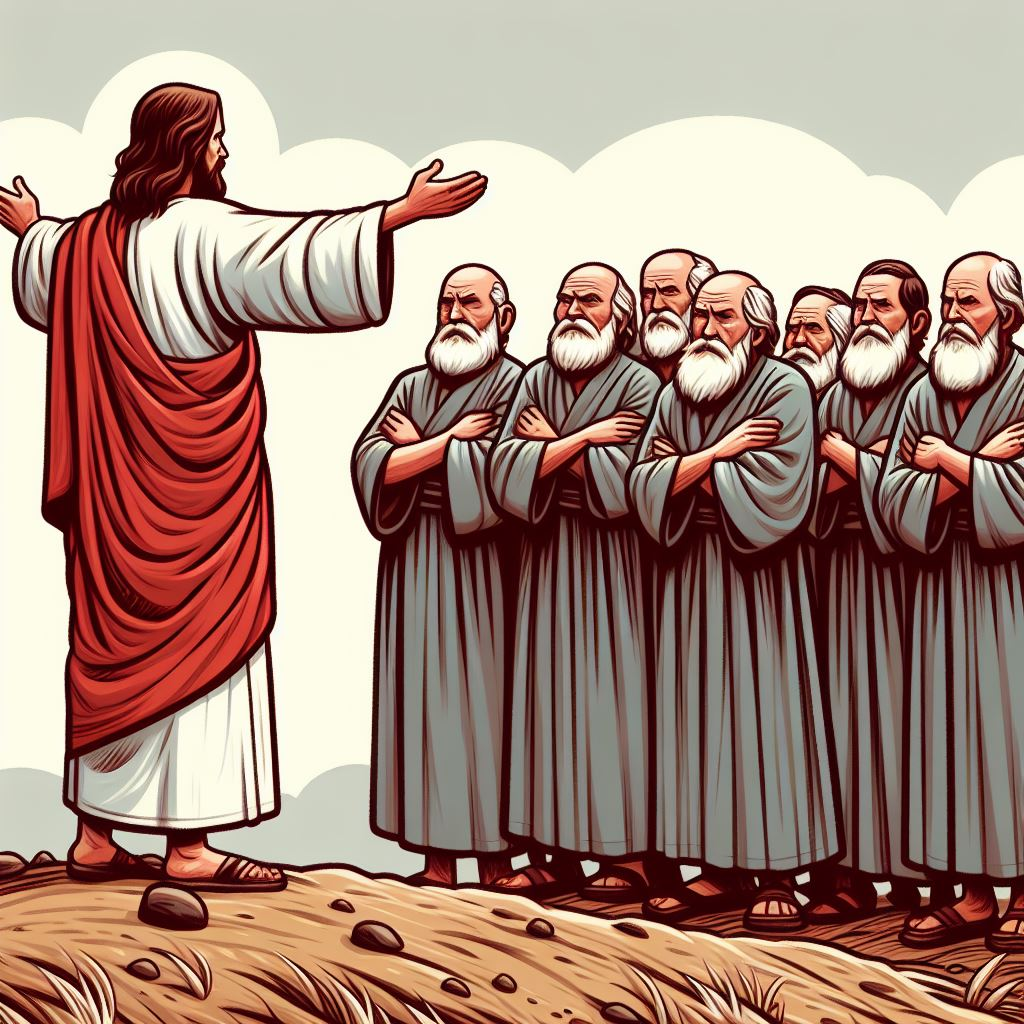
In contrast, John does not characterize all who interact with Jesus in this way. In the Prologue (John 1:1-18) to his narrative where he introduces the main points of his Gospel, he makes it clear that not all received him when Jesus came to them (1:11). Those who did receive him are also described as those who “believe unto” his name (1:12). This qualification is the first use of the the πιστεύω + εἰς (pisteuō + eimi) construction (τοῖς πιστεύουσιν εἰς τὸ ὄνομα αὐτοῦ, tois pisteuousin eis to onoma autou, ‘the ones believeing in his name’) in John and it shows that he viewed the reception and rejection of Jesus in terms of believe and trust in him. If one receives Jesus one believes him and has wholehearted trust in him. If one rejects Jesus then one has chosen to disbelieve him so has not placed wholehearted trust in him.

As the narrative unfolds, John presents characters which exemplify this negative response to Jesus. In John 5, certain Jews had decided to kill Jesus ‘because not only was he breaking the Sabbath, but he was even calling God his own Father, making himself equal with God’ (5:18). Later in the same chapter Jesus tells his listeners that though they seek eternal life in the Scripture (5:39), they in fact ‘refuse to come to me that you may have life’ (5:40). They are people who outright refuse to receive Jesus (5:43) and so it is questioned whether they can believe (5:44) the witnesses regarding who Jesus is. Jesus ends with a scathing appraisal on the listeners,

Do not think that I will accuse you to the Father. There is one who accuses you: Moses, on whom you have set your hope. For if you believed Moses, you would believe me; for he wrote of me. But if you do not believe his writings, how will you believe my words? (5:45-47)

Since there is no indication of a change of audience between John 5:18 and 5:33-47, it is safe to say that Jesus is continuing to address the Jews. These Jews do not believe in the sense of accepting the validity of claims about Jesus. This characterisation of the Jewish interlocutors as those who do not receive Jesus and do not believe him follows Jesus’s teaching on the resurrection (5:24-30).

Truly, truly, I say to you, whoever hears my word and believes him who sent me has eternal life. He does not come into judgment, but has passed from death to life. Truly, truly, I say to you, an hour is coming, and is now here, when the dead will hear the voice of the Son of God, and those who hear will live. For as the Father has life in himself, so he has granted the Son also to have life in himself. And he has given him authority to execute judgment, because he is the Son of Man. Do not marvel at this, for an hour is coming when all who are in the tombs will hear his voice and come out, those who have done good to the resurrection of life, and those who have done evil to the resurrection of judgment. I can do nothing on my own. As I hear, I judge, and my judgment is just, because I seek not my own will but the will of him who sent me.

Unlike John 11:25-26, Jesus explicitly says not all will be resurrected to life. Whereas in 11:25 the πιστεύω + εἰς (pisteuō + eimi) construction is used, in 5:24 Jesus says ‘whoever hears my word and believes him who sent me’. In this case John uses the πιστεύω (pisteuō ) + dative noun construction,14The Greek used is ὁ τὸν λόγον μου ἀκούων καὶ πιστεύων τῷ πέμψαντί με (ho ton logon mou akouōn kai pisteuōn tō pempsanti me). ‘Hearing’ (ἀκούων, akouōn) and ‘believing’ (πιστεύων, pisteuōn) are governed by the one article, so ‘hearing and believing’ describes the one person, not one person who hears and another person who believes. which means ‘give intellectual credence to’. This is a reference to the Father, which is not at all surprising given Jesus can impart life to others because, like the Father, he has life in himself (5:21, 26). In this context, the Father is a witness testifying to who Jesus really is (5:37), but Jesus also has the same authority to execute judgment as his Father (5:27). Not all will be resurrected to life; some will only be resurrected to judgment. It is not surprising that John does teach there is a resurrection to judgment since he has already told the Jews who opposed him in 8:21-24 that they would die in their sins if they failed to believe that he is I AM (i.e. God). This means John 11:25-26 presupposes that not all will believe Jesus and wholeheartedly trust him, so not all will be resurrected as believing and living people who will never die again.

As his narrative unfolds, John reminds his audience that not all believe and trust Jesus. While speaking to a crowd about the life found in him, Jesus states that they do not believe (6:35). Using the πιστεύω + εἰς (pisteuō + eimi) construction, he restates his message that those who wholeheartedly trust him will ‘have eternal life’. He ‘will raise him up on the last day’ (6:40). Some in the crowd complain (6:41) as do the disciples (6:67) at his claim to be the source of life. Clearly not all believed (6:64). Many disciples turned their back on him (6:66), though the twelve continue to believe him (6:68-69). One of the major points developed in John 6 is not all will believe and wholeheartedly trust Jesus.

In chapter 10 Jesus again tells the Jews that they do not believe him (10:24-26). Though several of them will come to place their trust in Jesus (see 10:42; 11:45 where the πιστεύω + εἰς (pisteuō + eimi) construction is used) there are others who continue to act in direct opposition to Jesus. There are Jews who report to the Pharisees who, along with the chief priests determine to have Jesus killed in order to prevent more people from placing wholehearted trust in him (11:46-48, the πιστεύω + εἰς (pisteuō + eimi) construction is used again: πάντες πιστεύσουσιν εἰς αὐτόν, pantes pisteusousin eis auton, ‘everyone will believe in him’). We are back at chapter 11 where Martha has been characterized as one who properly responds to Jesus with belief and trust. In this same chapter the Jewish leadership is characterized as those who not only refuse to believe and trust Jesus but seek to prevent others from doing so. John thus presents the characters in his narrative in such a way that he made it clear not all will come to believe Jesus and have wholehearted trust in him. This means that not all will be resurrected as living people who will never die again.

Perish the Thought Part 3: Revisiting John 11:25-26This is not the only way that John uses negative characterization to teach that not all will believe and trust Jesus. In certain places he emphasizes that some will face judgment. Though Jesus does state that he did not come to judge but to save (3:17; 12:47), there is good reason to think there is a time when those who reject him will be judged by him (5:22, 27, 29-30; 12:48), not because he brought them condemnation but because they were already condemned (3:18). Just as John characterizes certain interactions with Jesus as examples of true belief and wholehearted trust he also makes it clear that those rejecting Jesus are in some sense already condemned. One of the clearer statements that people do reject Jesus falls in John 3:17-21.

17 For God did not send his Son into the world to condemn the world, but in order that the world might be saved through him. 18 Whoever believes in him is not condemned, but whoever does not believe is condemned already, because he has not believed in the name of the only Son of God. 19 And this is the judgment: the light has come into the world, and people loved the darkness rather than the light because their deeds were evil. 20 For everyone who does wicked things hates the light and does not come to the light, lest his deeds should be exposed. 21 But whoever does what is true comes to the light, so that it may be clearly seen that his deeds have been carried out in God. (Emphasis added.)

Jesus is saying the verdict is already in (αὕτη δέ ἐστιν ἡ κρίσις, hautē de estin hē krisis, ‘this is the judgment’). There are those who love the darkness and not him. This resembles the Prologue to John’s Gospel where we are told that ‘He came to his own, and his own people did not receive him’ (1:5-11). John 3:18 connects wholehearted trust in Jesus (ὁ πιστεύων εἰς αὐτὸν, ho pisteuōn eis auton) with this verdict. ‘Those who do not believe are already condemned’ (ὁ … μὴ πιστεύων ἤδη κέκριται, ho… mē pisteuōn ēdē kekritai). This is not a separate judgment from the one that will take place after the resurrection. It is a rhetorical way of talking about a future event as if it is happening in the present. This literary device is called prolepsis. An excellent example of prolepsis can be found in John Keats’s poem entitled “Isabella” (1820),15See also Joseph Dear’s article on prolepsis.

So the two brothers and their murdered man
Rode past fair Florence

Needless to say, it would be quite alarming if people argued that Keats had in mind a ‘spiritual’ kind of murder because the murdered man is alive whilst riding with the two brothers. The literary device is proleptic in the way it anticipates the future assassination of a still-living character through the use of the past tense (‘rode’). It is a reference to the man as having already been “murdered” (his future fate) at a time when that fate had not yet befallen him. John uses the same kind of literary device when he speaks of a person already having eternal life (3:16, 36, 5:24; 6:47) or being condemned (3:18). The decision to reject Christ now means the wrath of God remains on a person (3:36) and so anticipates the future judgment as if it is a present reality.

In light of this, Jesus’s affirmation that those who “believe unto” him will be resurrected as living ones cannot be seen to apply to all who are resurrected. John did not think all would come to believe and trust in Jesus; therefore, the statement that resurrected believers would be living people who would never die forever cannot apply to those who reject him. To be sure, everyone will be resurrected (5:25, 28-29a). However, John makes a distinction between those who have done good and those who have done evil. Only believers will rise to the resurrection of life (5:29).

Returning to the use of the present tense in John 11:25-26, from a verbal aspect point of view the present tense of the participles ‘lives’ (ζῶν, zōn) and ‘believes’ (πιστεύων, pisteuōn) convey the sense of progression.16See this link for a decent introduction to Greek verbal aspect. That is, the point of view presented by John with the use of the present tense is one of an ongoing process. It is like watching a parade on the television. You don’t see the parade as a whole, but the continual passing by of the participants in the parade. This is why I am always tempted to translate ζῶν (zōn) as ‘living one’ and πιστεύων (pisteuōn) as ‘believing one’, though that can read awkwardly in English. The perspective of an ongoing process provided by the present tense participles makes me think of life in a dynamic sense. Since ζῶν (zōn) and πιστεύων (pisteuōn) are participles that are functioning like nouns they tell you something about the person as one who is actively and ongoingly believing and living. To be sure, John does use other tenses with reference to true believers,17For example, see the use of the aorist tense in the following verses John 1:7; 2:11, 22-23; 4:39, 41, 50, 53, 5:44; 8:24, 30-31; 10:42; 11:15; 11:40, 45; 17:8; 20:8; 20:29. but he chose to use the present tense in 11:25-26, and that does add a nuance to the statement that believers who die and are resurrected are actively living and believing forever.

The use of ὁ ζῶν καὶ πιστεύων (ho zōn kai pisteuōn) in 11:26 is interesting for another reason. John could have just said that those who believe will die, be resurrected (11:25), and live forever (11:26). The inclusion of πιστεύων εἰς ἐμὲ (eis eme pisteuōn, ‘believing unto me’) in 11:26 is surprising because we tend to assume that belief in the eschaton is unnecessary as we will already be saved. But John is emphasizing how we will continue to have wholehearted trust in him after our resurrection. You die entrusting him with your fate and you will be resurrected as one who will forever be that kind of person.

Perish the Thought Part 3: Revisiting John 11:25-26Why add ζῶν (zōn, ‘living’)? After all, οὐ μὴ ἀποθάνῃ εἰς τὸν αἰῶνα (ou mē apothanē eis ton aiōna, ‘never die forever’) sufficiently communicates the idea that resurrected believers will be immortal. In John 4 ζῶν (zōn, ‘living’) is used when Jesus tells a Samaritan woman who could obtain living water (4:10).18The participle ζῶν (zōn, ’living’) is being used as an adjective here but this does not alter what may be drawn from its use here. The idea of ‘living water’ could very well have to do with purification since moving water tends to become clean.19My lecturer at Bible College suggested this in our exegetical class on John 4. However, drinking ‘living water’ means one ‘will never be thirsty again’ as it will be ‘a spring of water welling up to eternal life’ 4:14). The language behind never thirsting again is the οὐ μὴ + εἰς τὸν αἰῶνα (ou mē + ton aiōna) construction that is used in John 11:26 to express the idea of never dying forever. This living water will eternally flow from the resurrected believer so that person will be immortal (see also John 7:38). In John 6, Jesus talks about how he is the living bread (6:48-51). He is living because of the living Father (6:57), who has life in himself and has granted that Jesus has life in himself (5:26). Jesus is thus the way one can live forever (6:51). Coming back to John 11:26, by describing resurrected believers as ζῶν (zōn, ‘living’), John emphasizes that we will be living in the same way as the Father and Jesus are now ζῶν (zōn, ‘living’). It is noteworthy that John refrains from referring to genuine believers who have not yet been resurrected as ζῶν (zōn, ‘living’) people. So, while it it is true that all will indeed come alive at the final resurrection, only believers who have died and resurrected as believers will be resurrected as ζῶν (zōn, ‘living’) people. According to John, those of us who have genuine faith and trust in Christ have eternal life now in a proleptic sense but this will only be realized for us when we are resurrected as immortal people.

If believers are resurrected so they are ζῶν (zōn, ‘living’) people who will never die, what did John think would eventually happen to those who will be resurrected to judgment (5:29)? John 15 gives us a clue. Early in this chapter, Jesus describes one who fails to remain in him (15:1-6).

1 “I am the true vine, and my Father is the vinedresser. 2 Every branch of mine that does not bear fruit he takes away, and every branch that does bear fruit he prunes, that it may bear more fruit. 3 Already you are clean because of the word that I have spoken to you. 4 Abide in me, and I in you. As the branch cannot bear fruit by itself, unless it abides in the vine, neither can you, unless you abide in me. 5 I am the vine; you are the branches. Whoever abides in me and I in him, he it is that bears much fruit, for apart from me you can do nothing. 6 If anyone does not abide in me he is thrown away like a branch and withers; and the branches are gathered, thrown into the fire, and burned.”

Using an extended vine metaphor, Jesus tells his disciples that those who chose to not remain in him are like unproductive branches.20I realize there are people who will argue that this passage does not have to do with the final fate of the lost, but the point of the metaphor is to at least describe what happens to those who do not bear fruit and do not choose to remain in Jesus. The vine metaphor is from the Old Testament where the vine stands for Israel herself.21See, for instance, Isa. 5:1-7; 27:2-6; cf. Ps. 80:8-16; Jer. 2:21; 6:9; 12:10-13; Ez. 15:1-8; 17:5-10; 19:10-14; Hos. 10:1-2; 14:7. G. K. Beale & D. A. Carson, Commentary on the New Testament Use of the Old Testament, (Baker Publishing Group: 2007), 491) Andreas j. Köstenberger observes that John transforms this into a metaphor about Jesus.

whereas the vine’s purpose of existence is to bear fruit for its owner, references to Israel as God’s vine regularly stress Israel’s failure to produce good fruit, issuing in divine judgment … In contrast to Israel’s failure, Jesus claims to be the “true vine,” bringing forth the fruit Israel failed to produce. Thus Jesus, the Messiah and Son of God, fulfills Israel’s destiny as the true vine of God…22Ibid.

Perish the Thought Part 3: Revisiting John 11:25-26Notice how he says ‘whoever abide in me’ (he uses the present participle here, ὁ μένων ἐν ἐμοὶ, ho menōn en emoi) is the one who who bears fruit. However, not abiding in Jesus means one is discarded and withers (15:6). The word behind ‘withers’ is ξηραίνω, which when used with the passive voice (as it is here) means ‘become dry’ or ‘dry up’.23William Arndt, et al., A Greek-English Lexicon of the New Testament and Other Early Christian Literature, (University of Chicago: 2000), 684. Is it interesting that John also uses the aorist tense here, which does not convey any idea of the process of drying out. The branch that is detached from the vine is a dead and dry stick. This is the opposite of being those believers who have living water flowing out of them so they themselves are truly living. The wordplay between ‘takes away’ (αἴρω, airei) and ‘prunes’ (καθαίρω, kathairei) helps contrast those who bear fruit and those who do not. Contrary to the universalist position that all will eventually be purified, Jesus is saying that those who remain in him will be ‘cleansed’ (this is a connotation of pruning a plant, though not one which can be pressed too far in this context). This is not what happens to those who fail to bear fruit. Those people are dead and so will be discarded and disposed of in a fire.

All that I discuss above is relevant for how we should interpret John 3:16.

For God so loved the world, that he gave his only Son, that whoever believes in him should not perish but have eternal life.

If believing and trusting Jesus means we become living people instead of becoming dried out branches that are disposed of in a fire, then we have another good reason to think that ‘perish’ (ἀπόλλυμι, apollumi) really does refer to the actual death of those who reject him. Daniel Wallace states that the use of πᾶς ὁ πιστεύων (pas ho pisteuōn; Wallace translates this as ‘everyone who believes’) in John 3:16 should be regarded as a statement of a general and timeless truth (which he calls “gnomic”).24Daniel Wallcace, Greek Grammar Beyond the Basics: An Exegetical Syntax of the New Testament, (Zondervan: 1996) 620. As such, this verse is the perfect verse for conditionalists to cite as a summary of John’s conviction that eternal life can only be obtained through Jesus with the implication that not everyone will finally escape death. As such, this is a prooftext that conditionalists can cite in discussions with both universalists and traditionalists.


References
1 Unless otherwise indicated all quotes of the Bible will be from the ESV. On occasions when I am discussing relevant Greek words and phrasing I may provide my own rendering but this is not intended to suggest errors on the part of the ESV.
2 The debate can be found here.
3 For a brief discussion of the verbal aspect as it relates to his controversy over Greek aspect in the White vs Flowers debate see here.
4 For those who are interested in introductions to Greek participles can follow the link here and here.
5 The word ὁ (ho) is just an article that means ‘the’. Its use here is how we know that πιστεύων (pisteuōn, ‘living’) must be acting like a noun here.
6 Leon Morris, Jesus Is the Christ: Studies in the Theology of John, (William B. Eerdmans Publishing: 1989), 179.
7 Ibid., 180.
8 Murray J. Harris, John, Kindle ed., (B&H Publishing Group: 2015), Kindle locations 1647-1650.
9 Ibid., Kindle locations 1640-1643.
10 There are variations of the construction where it might refer to believing unto his name (John 1:12; 2:23) the Son (3:18; 5:40), Son of Man (9:35), Jesus (12:11), the Light (12:36). Jesus often might simply say ‘believe in me’ (6:35; 7:38; 12:44, 46; 14:1, 12; 16:9; 17:20) or the variation ‘believe in him’) might be used (John as narrator can use this variation but Jesus does as well, see 2:11; 3:16; 4:39; 6:29; 7:38; 12:37, 42.
11 Since I have published my article where I discuss the meaning of οὐ μὴ ἀποθάνῃ εἰς τὸν αἰῶνα (ou mē apothanē eis ton aiōna) in John 11:26 I have vacillated between my own reading of the clause and Glenn Peoples’s reading of it. I find his reading (‘not be dead forever’) very attractive as John would then be presenting a strong contrast between eternal life as living forever and the fate of being dead forever. That would fit very well with the CI reading of Matthew 25:46 as presenting eternal life as living forever in contrast with an eternal punishment that amounts to the eternal privation of life. Alas, I am not quite there yet, as I still see elements in John that make me think that my reading of οὐ μὴ ἀποθάνῃ εἰς τὸν αἰῶνα (ou mē apothanē eis ton aiōna) is to be preferred.
12 Murray J. Harris, John, Kindle ed., (B&H Publishing Group: 2015), Kindle locations 1647-1650), Kindle locations, 7004-7007.
13 D. A. Carson, The Gospel according to John, Kindle ed., (Eerdmans Publishing: 1991), Kindle locations, 8633-18081.
14 The Greek used is ὁ τὸν λόγον μου ἀκούων καὶ πιστεύων τῷ πέμψαντί με (ho ton logon mou akouōn kai pisteuōn tō pempsanti me). ‘Hearing’ (ἀκούων, akouōn) and ‘believing’ (πιστεύων, pisteuōn) are governed by the one article, so ‘hearing and believing’ describes the one person, not one person who hears and another person who believes.
15 See also Joseph Dear’s article on prolepsis.
16 See this link for a decent introduction to Greek verbal aspect.
17 For example, see the use of the aorist tense in the following verses John 1:7; 2:11, 22-23; 4:39, 41, 50, 53, 5:44; 8:24, 30-31; 10:42; 11:15; 11:40, 45; 17:8; 20:8; 20:29.
18 The participle ζῶν (zōn, ’living’) is being used as an adjective here but this does not alter what may be drawn from its use here.
19 My lecturer at Bible College suggested this in our exegetical class on John 4.
20 I realize there are people who will argue that this passage does not have to do with the final fate of the lost, but the point of the metaphor is to at least describe what happens to those who do not bear fruit and do not choose to remain in Jesus.
21 See, for instance, Isa. 5:1-7; 27:2-6; cf. Ps. 80:8-16; Jer. 2:21; 6:9; 12:10-13; Ez. 15:1-8; 17:5-10; 19:10-14; Hos. 10:1-2; 14:7. G. K. Beale & D. A. Carson, Commentary on the New Testament Use of the Old Testament, (Baker Publishing Group: 2007), 491)
22 Ibid.
23 William Arndt, et al., A Greek-English Lexicon of the New Testament and Other Early Christian Literature, (University of Chicago: 2000), 684.
24 Daniel Wallcace, Greek Grammar Beyond the Basics: An Exegetical Syntax of the New Testament, (Zondervan: 1996) 620.

A Momentary Lapse of Exegesis: Why D.A. Carson is Mistaken on Matthew 18:14

D.A. Carson is a recognized expert on biblical exegesis. But even the experts can sometimes get things wrong! Let’s take a look at an interesting example.

10See that you do not despise one of these little ones. For I tell you that in heaven their angels always see the face of my Father who is in heaven. 12What do you think? If a man has a hundred sheep, and one of them has gone astray, does he not leave the ninety-nine on the mountains and go in search of the one that went astray? 13And if he finds it, truly, I say to you, he rejoices over it more than over the ninety-nine that never went astray. 14So it is not the will of my Father who is in heaven that one of these little ones should perish.”
–Matthew 18:10-14
1Unless otherwise indicated all quotation of the Bible will be from the ESV.

What does the word perish mean in this context?

In my reading of traditionalists’ commentaries to better understand how they interpret Matthew 18:14, I noticed something interesting in D. A Carson’s handling of this verse.

There are two books where he comments on the verse. The first that I will quote is from his commentary on Matthew, where he states,

Jesus drives the lesson home: the heavenly Father is unwilling for any of “these little ones” … to be lost. If that is his will, it is shocking that anyone else would seek to lead one of “these little ones” astray. … This love for the individual sheep is not at the expense of the entire flock but so that the flock as a whole may not lose a single one of its members.2D. A. Carson, Matthew, Kindle ed. (Zondervan, 2010), Kindle locations, 14328-14336.

In another book that focuses on themes in Matthew, Carson discusses this verse again,

Similarly, in 18:10–14 the expression “one of these little ones” must be understood to refer to believers, true disciples of Jesus who have honestly humbled themselves. Not one of them is to be despised; for on the one hand, “their angels in heaven always see the face of my Father in heaven.” (Whatever this clause means, it implies that the little ones should not be despised because their dignity is in God’s eyes very great.) On the other hand, the shepherd, the Father Himself (18:14), is concerned for each sheep in His flock, so much so that He goes after the one that strays. After all, it is not His will that even one of these little ones, these humbled, true believers, should perish. If that is His attitude, it is an abomination for anyone else to try to make the little ones stumble.3D. A. Carson, God with Us: Themes from Matthew (Eugene, OR: Wipf & Stock, 2009), 112–113.

I know the ESV renders ἀπόλλυμι as ‘perish’, but I want to make it clear that I do not think that Carson is erring by using the word ‘lost’. The reason for this will become apparent as I discuss this subject. What does Carson mean by ‘perish’ and ‘lost’? The Greek word behind “perish” is the much contested verb, ἀπόλλυμι. Since ἀπόλλυμι does have a range of meaning including “to destroy”, “to ruin”, “to perish”, and “to lose something”4William Arndt et al., A Greek-English Lexicon of the New Testament and Other Early Christian Literature (Chicago: University of Chicago Press, 2000), 115. traditionalists have had room to argue for connotations of this verb that they think support the doctrine of eternal torment in hell. This is the case in Carson’s The Gagging of God: Christianity Confronts Pluralism, where he interacts with John Stott’s argument that the biblical language of destruction supports the doctrine of annihilationism by arguing,

The àπώλεια word-group has a range of meanings, depending on the context. It can refer to the “lost” coin or son of Luke 15, and to the “ruined” wineskin of Matthew 9:17: in neither case is cessation of existence in view. Similarly, the ointment lavishly poured out on Jesus is in the mind of his disciples a “waste” (Matt. 26:8): the same noun is deployed, with no suggestion that the ointment goes out of existence.

Moreover, when “life” and “destruction” are contrasted (as in John 3:16, etc.), one might reasonably infer that “destruction” refers to cessation of existence only if “life” means no more than mere existence. But is Christ doing no more than contrasting mere survival and extinction? Rather, Christ is contrasting two qualitatively different types of existence, one involving a loving communion with God and another lacking it (a state of ‘ruin’).”5Carson, D. A.. The Gagging of God: Christianity Confronts Pluralism, Kindle ed. (Zondervan, 1996), Kindle locations, 11886-11895.

It is clear that for Carson, whatever ἀπόλλυμι means in Matthew 18:14, it cannot involve the idea of complete destruction or the death of the person as conditionalists maintain. However, in his introduction to the section spanning Matthew 18:10-14, Carson makes two observations that help the case that Matthew 18:14 supports conditionalism rather than the doctrine of eternal torment in hell. Carson’s first observation is as follows,

Verse 10 clearly follows vv.5–9; but because it also forms a neat inclusio with v.14, vv.10–14 must be read together in the light of the preceding pericope.6Carson, Matthew, Kindle locations, 14277-14283.

An inclusio is a “literary framing device in which the same word or phrase stands at the beginning and the end of a section.”7Matthew S. DeMoss, Pocket Dictionary for the Study of New Testament Greek, (InterVarsity Press, 2001), 71 An inclusio tells the reader where a given literary unit of writing begins and ends. It is meant to be read and thought of together. In this case, Carson is saying that the inclusio of Matthew 18:10-14 is linked with the immediately preceding literary unit of Matthew 18:5-9.8One may wish to quibble over whether the preceding literary unit also incorporates Matthew 19:1-4 but for our purposes it is sufficient to note that what Jesus says in Matthew 18:8-9 must be considered for what Jesus meant to say in verse 14, and vice versa.

His second observation has to do with the possible parallel passage, Luke 15:3-7. On the face of it, Luke 15:3-7 may appear to have the same point in view but Carson writes,

It is remarkable how different Matthew’s and Luke’s forms of the parable are when closely compared in the Greek text. Almost every relevant term is not the same as in the parallel, and the few that are the same are well within the bounds of repetition expected in an itinerant ministry (see comments at 5:1–2). The evidence suggests that these are two similar parables, both taught by Jesus, but with very different aims… Matthew is not concerned with “faithful pastorship in the community” … but, following the preceding pericope, with the importance in Messiah’s community of harming no member, of sharing the Father’s concern that none of “these little ones” be lost.9D. A.; Carson, Matthew, Kindle locations, 14283-14295.

In the study of the Synoptics, it is important to be aware of parallel passages so one can evaluate the extent to which the parallel(s) should impinge on the interpretation of the passage being exegeted. Luke 15:3-7 is the kind of passage that traditionalists might cite to deny that the use of ἀπόλλυμι has to do with the destruction of the little ones in Matthew 18:14 at all. With his observations, Carson has ruled this move out entirely. Both of Carsons’ observations mean Matthew 18:1-9 and similar passages within Matthew itself should be the main lens through which an interpreter understands the meaning of perish in Matthew 18:14.

How do we apply that to our exegesis of this verse?

First, I would point out that Carson is correct to say that Matthew 18:5-14 is a cohesive unit. His argument can be supplemented with the observation that the literary unit of Matthew 18:1-14 is bound together by similar phrases like ‘become like children’ (Mat 18:3), ‘this child’ (v4), ‘one such child’ (v5), ‘one of these little ones’ (v6), ‘one of these little ones’ (v10), ‘one of these little ones’ (v14). This does not mean that every section of the passage make exactly the same point. Verse 1-2 are an introduction to the section with verses 3-4 establishing the prerequisite of becoming like children as a prerequisite for entering the kingdom. This means that verses 5-9 do not necessarily have infants in view but believers who have become like children in some respect. They are the little ones who are in view in the remainder of the passage.

Verses 5-9 and 10-14 express overlapping themes. In verses 5-9 the focus is on the danger to people who might cause these little ones to sin while verses 10-14 focus on the protection of the little ones from perishing (or being lost). Given the warnings of severe treatment in store for those who cause the little ones to sin (v 6) and Jesus’s comments about avoiding sin so one can avoid being thrown into the fire of Gehenna/eternal fire (vs 8-9) it stands to reason that in Matthew 18:14 Jesus is referring to a fate that is of eternal significance. That is, when Jesus says ‘it is not the will of my Father who is in heaven that one of these little ones should perish’ he has their final fate in mind.

Second, if Matthew 18:5-9 (and not Luke 15:3-7) is the primary lens through which one must read Matthew 18:14 then it stands to reason that thematic, and verbal clues from that passage that hark back to similar Matthean passages also form part of that lens. That is, where we can see that Matthew 18:5-14 contains words, phrases, and themes that are used elsewhere in Matthew when discussing a similar theology, then those passages form part of the lens through which we should interpret the text being exegeted.

Having established those two points, it follows that the exegete must explore any literary, thematic or verbal cues in Matthew 18:5-14 and elsewhere in the narrative that may shed light on what verse 14 teaches. As it turns out, there are several clues in Matthew 18:5-14 that do make the reader remember previous passages in Matthew.

One example is the use of the verb σκανδαλίζω (skandalizō) ‘to cause to stumble’ throughout the passage. It occurs where you see the English ‘cause … to sin’ in verses 6, 8, and 9. The cognate noun, σκάνδαλον (skandalon) ‘stumbling block’, occurs twice in Matthew 18:17 and is rendered as ‘temptation to sin’ and ‘temptations’. That noun also occurs in Matthew 13:40-42.

40Just as the weeds are gathered and burned with fire, so will it be at the close of the age. 41The Son of Man will send his angels, and they will gather out of his kingdom all causes of sin and all law-breakers, 42and throw them into the fiery furnace. In that place there will be weeping and gnashing of teeth.

This is part of Jesus’s own explanation of what the parable about weeds secretly being sown in the kingdom (Matt 13:24-30) means. Jesus says all ‘causes of sin’ will be thrown into the fiery furnace and burned up just as the weeds in the parable are burned up in a harvest fire (v30). To be sure, he also says there will be weeping and gnashing of teeth, but that occurs whilst they are consumed in that fire. That is a clear indication about what the eternal fire will do to people. It will kill them.

The verb, σκανδαλίζω, occurs in Matthew 5:29-30.

29If your right eye causes you to sin, tear it out and throw it away. For it is better that you lose one of your members than that your whole body be thrown into hell. 30And if your right hand causes you to sin, cut it off and throw it away. For it is better that you lose one of your members than that your whole body go into hell.

In this case, body parts rather than people are in view as the cause of sin. Now, if you are familiar with what commentaries have to say on this passage you will know that there are discussions about how this ought not to be taken literally so that we can obey this passage even when we do not actually tear out an eye or cut off a hand. This is because, when we give up what causes us to sin, we do permanently lose access to something we loved as much as an eye or a hand. So the point is to rid ourselves of anything that causes us to sin, even if one must do away with that cause of sin by destroying it completely at great and permanent cost.

I have more to say about this passage below.

One more obvious example of verbal allusion to other passages is the use of the language of ‘the eternal fire’ (v8) and ‘the hell of fire’ (v9). The phrase ‘the eternal fire’ appears again in Matthew 25:41 where Jesus indicates evil humans will be thrown into the fire that is prepared for the Devil and his angels. That verse does not indicate what that fire does to those who are thrown into it. Moreover, the adjective phrase, ‘eternal punishment’ (Matt 25:46) is ambiguous so that provides little help in clarifying what the eternal fire does to people thrown into it.

What about the phrase, ‘the hell of fire’?

The Greek behind this phrase is τὴν γέενναν τοῦ πυρός. This is one of those passages where Jesus uses the word γέεννα (geenna). As it turns out, the exact phraseology τὴν γέενναν τοῦ πυρός occurs in Matthew 5:25. Bruce Chilton states,

In 5:2, the first usage of γέεννα in his Gospel, Matthew adds “of fire” to the term in order to make its meaning clearer. In vv. 29 and 30 of the same chapter, no such qualification is necessary, because the concept has already been introduced with its explanatory qualifications. The order of sayings therefore seems to reflect a conscious plan of presentation…10Bruce Chilton, A Galilean Rabbi and His Bible: Jesus’ Own Interpretation of Isaiah, (SPCK, 1984), 103-104.

One implication of this is verses like Matthew 10:28, where γέεννα is the place where the soul and the body can be destroyed, imply that the instrument through which God would destroy the whole person is the fire of Gehenna. There is debate over exactly what ‘destroy’ means in that verse, but I have yet to find adequate rebuttals to the arguments for the conditionalist reading of the verse provided at the Rethinking Hell website.11Glenn Peoples, ‘The Meaning of “APOLLUMI” in The Synoptic Gospels, Rethinking Hell [blog], October 27, 2012, ’https://rethinkinghell.com/2012/10/27/the-meaning-of-apollumi-in-the-synoptic-gospels/, and Darren Clark, Exegesis Interrupted: A Critique of Stand To Reason’s Article “Hell Interrupted, Part 2”, Rethinking Hell [blog], https://rethinkinghell.com/2018/11/13/exegesis-interrupted-a-critique-of-stand-to-reasons-article-hell-interrupted-part-2/

I will not be going over old ground here except to say that even though traditionalists are correct that the Greek word behind ‘destroy’, ἀπόλλυμι, does have a range of meaning allowing debate over what Matthew 10:28 means, all the contextual evidence supports the conclusion that ἀπόλλυμι means ‘to slay’ in that verse. This brings us to the point where we can observe that the point Jesus is making in Matthew 10:28 is the same one he makes in Matthew 13:40-42: Those who end up in that fire will be killed.

Finally, comparing the way ἀπόλλυμι is used in Matthew 5:29-30 and in 18:14. In the earlier passage, ἀπόλλυμι is used when referring to the body parts. The exact phraseology in Greek in both verses is as follows, συμφέρει γάρ σοι ἵνα ἀπόληται ἓν τῶν μελῶν σου, which is rendered in the ESV as ‘For it is better that you lose one of your members’. “Lose” renders ἀπόληται. What does it mean in this context? Carson explains,

Just this: we are to deal drastically with sin. We must not pamper it, flirt with it, enjoy nibbling a little of it around the edges. We are to hate it, crush it, dig it out. “Put to death, therefore, whatever belongs to your earthly nature: sexually immorality, impurity, lust, evil desires and greed, which is idolatry” (Col. 3:5).12D. A. Carson, Jesus’s Sermon on the Mount and His Confrontation with the World: A Study of Matthew 5-10, (Baker Publishing Group, 1987), 56-57.

Put the offending body part to death!

Obviously this is a figurative way of referring to doing away with sin or what tempts us to sin. Having recognized that, Carson is not using death with some ‘spiritual’ sense of separation or whatever traditionalists mean when they talk about spiritual death. He has in mind the normal meaning of death as killing a living being: ‘a permanent cessation of all vital functions: the end of life’.13Merriam-Webster Dictionary, https://www.merriam-webster.com/dictionary/death, s.v. ‘Death’.

Yes, Jesus is speaking hyperbolically but the whole point of talking about plucking an eye out or cutting off a hand is to say we must destroy that which causes us to sin without expecting to get it back. If you sever body parts you kill that part of you. Those body parts will wither away into nothing, and it’s stated that you “enter the kingdom” without that body part. This is surely not literally true of body parts (our glorified bodies at the resurrection will have all their limbs), but it is true at least in general of causes of sin. Even rendered as “lost,” that kind of permanent destruction is what ἀπόλητα refers to here. You lose it because it will be destroyed and so it can never cause you to stumble into sin. The intent is to say that we must kill and destroy those things that might cause us to stumble in sin.

How does this relate to what Matthew 18:14 means? Carson himself ruled out looking to the parallel in Luke 15:3-7. As it turns out, Jesus uses some of the language from Matthew 5:29-30 in 18:14.

29If your right eye causes you to sin, tear it out and throw it away. For it is better that you lose (ἵνα ἀπόληται) one of your members than that your whole body be thrown into hell. 30And if your right hand causes you to sin, cut it off and throw it away. For it is better that you lose one (ἵνα ἀπόληται ἓν) of your members than that your whole body go into hell.–Matthew 5:29-30

14So it is not the will of my Father who is in heaven that one of these little ones should perish (ἵνα ἀπόληται ἓν).–Matthew 18:14

I have inserted the Greek into the translation just to give the reader a sense of where the language fits. This particular construction (word order) is rare in the NT, only being used in these two passages in Matthew and in John 17:3. That is not in and of itself enough to draw firm conclusions, for there can be variations in the syntax of the clauses in which these words are used. However, keep in mind that Matthew had, as noted above, a penchant for repeating words from earlier passages in later passages while addressing the same theme. This does mean we have warrant for arguing the use ἵνα ἀπόληται ἓν in Matthew 5:29-30 ought to inform our understanding of the use of the same construction in 18:14. Just as ἀπόλλυμι is used to the killing or destruction of the body parts in Matthew 5:29-30, so also the use of the same verb in 18:14 has to do with being killed or destroyed!

There are several implications that can be noted from this analysis.

First, it matters little that ἀπόλλυμι is rendered ‘lost’ or ‘perish’. In Matthew 5:29-30 ἀπόλλυμι is usually rendered as ‘lost’ but people do not think this means the hand or eye is merely misplaced. Most recognize that these body parts are lost precisely because they are destroyed. This means that Carson’s argument that ἀπόλλυμι has a range of meaning (see the quote from his The Gagging of God above) does nothing to establish what that word contextually denotes in any particular context in the hell proof-texts. Carson is correct that ἀπόλλυμι does have a range of meaning, but better exegetical practice would have led him to consider Matthew 18:14 in light of 5:29-30. That could have led him to the conditionalist reading of these verses.

Second, since Matthew 18:5-14 form one literary unit it stands to reason that what Jesus says in verse 14 helps clarify what he says in verses 8-9. In verse 14 Jesus says the little one is rescued from death. Given Jesus’s emphasis on not causing others to sin (vs 6-7) and the need to excise any cause of sin in our own lives (vs 8-9) then the final fate of sinners must be in view in this passage. This means that verse 14 also has the final fate of the little ones in view. Having noted that, we are able to better analyze the contrast in verses 8-9. Here are those verses,

8And if your hand or your foot causes you to sin, cut it off and throw it away. It is better for you to enter life crippled or lame than with two hands or two feet to be thrown into the eternal fire. 9And if your eye causes you to sin, tear it out and throw it away. It is better for you to enter life with one eye than with two eyes to be thrown into the hell of fire.

Notice the contrast. It is better to destroy an offending body part than to end up in the eternal fire/fire of Gehenna. If verse 14 has in view the death of the lost one who had gone astray, then we can conclude that the ultimate fate in that fire is the death of the whole person. This means the contrast is between lacking a part of your body when you enter the Kingdom or having your whole body destroyed in that fire. As such, this rules out the typical traditionalist assumption that the contrast is between the implicit pain involved in destruction of a part of our bodies and eternal torment in the eternal fire.

Third, this fits with what Jesus says about the final fate of the lost in the other Gospels. Most notably, the aorist subjunctive form of ἀπόλλυμι used in Matthew 18:14, ἀπόληται (‘perish’), is used in John 3:16. There is already very good exegetical evidence that John 3:16 teaches conditionalism14See Darren Clark, “Perish the Thought: How John 6 and 11 Challenge the Traditionalist Reading of John 3:16, [blog]”, June 14, 2019, https://rethinkinghell.com/2019/06/14/perish-the-thought-john-3-16/, and Darren Clark, “Perish The Thought, Part 2: More Challenges to the Traditionalist Reading of John 3:16 [blog]”, December 27, 2019, https://rethinkinghell.com/2019/12/27/perish-the-thought-part-2-john-3-16/. The use of ἀπόλλυμι in such similar contexts is just another piece of evidence that when Jesus said in John 3:16 that believers should not perish but have eternal life he really did mean we are saved from dying at the final judgment.

Then there is Luke 12:4-5 where Jesus says,

4I tell you, my friends, do not fear those who kill the body, and after that have nothing more that they can do. 5But I will warn you whom to fear: fear him who, after he has killed, has authority to cast into hell. Yes, I tell you, fear him!

The word for ‘killed’ in Luke 12:5 is not ἀπόλλυμι but ἀποκτείνω (apokteinō). However, the two verbs are used synonymously in Matthew 10:28, where ἀπόλλυμι is translated as destroy but has the meaning of ‘to slay’. The verbs are also used synonymously throughout the Synoptic Gospels. They are used when it is Herod’s determination to kill another person is in view (ἀποκτείνω is used in Matt 14:5; Luke 13:31 and ἀπόλλυμι in Mat 2:13), when people sought to kill Jesus (ἀποκτείνω is used in Matt 16:21, 17:23 26:4; Mark 8:31; 9:31; 10:34; 14:1; Luke 9:22; 18:33 ἀπόλλυμι is used in Mat 27:20; Mar 3:6; 11:18; Luk 19:47). The parable of the tenants who kill a king’s messengers is a good example of the two verbs being used synonymously (ἀποκτείνω is used in Matthew 21:35, 38-39; Mark 12:5, 7; Luke 20:14-15 while ἀπόλλυμ is used in Matthew 21:41; Mark 12:9; Luke 20:16). When ἀπόλλυμ is used it can be rendered as ‘destroy’ but the meaning is always, ‘to slay’.

Then there is Mark 9:42-48.

42Whoever causes one of these little ones who believe in me to sin, it would be better for him if a great millstone were hung around his neck and he were thrown into the sea. 43And if your hand causes you to sin, cut it off. It is better for you to enter life crippled than with two hands to go to hell, to the unquenchable fire. [44] 45And if your foot causes you to sin, cut it off. It is better for you to enter life lame than with two feet to be thrown into hell. [46] 47 And if your eye causes you to sin, tear it out. It is better for you to enter the kingdom of God with one eye than with two eyes to be thrown into hell, [48] ‘where their worm does not die and the fire is not quenched.’

Considering there are little ones in view in this passage as there are in Matthew 18:1-14, this passage is particularly relevant. The statement, ‘their worm does not die and the fire is not quenched’ is a near verbatim quote of the LXX of Isaiah 66:24.

24And they shall go out and look on the dead bodies of the men who have rebelled against me. For their worm shall not die, their fire shall not be quenched, and they shall be an abhorrence to all flesh.

Isaiah 66:15-16 is the context of that scene.

15For behold, the LORD will come in fire, and his chariots like the whirlwind, to render his anger in fury, and his rebuke with flames of fire. 16For by fire will the LORD enter into judgment, and by his sword, with all flesh; and those slain by the LORD shall be many.

Jesus is using a scene where the unburied corpses of the slain enemies of God are abhorred by the still living righteous, while “their worm” prospers and their fire burns. This is akin to what Jesus says in Luke 12:5 where the thing to be feared is having your corpse “having been killed” then dumped in Gehenna.

It is about being killed, not remaining alive forever.

That’s what Jesus consistently talked about when referring to the final fate of the lost. Matthew 18:14 is no exception. Talking about the little one being rescued from perishing is just another way Jesus emphasized that he rescues us from a final punishment in the form of execution.

In the final analysis, it is disappointing that Carson failed to follow up on his introductory observations on Matthew 18:10-14. I consider him to be a fine exegete because he often does follow the exegetical evidence where it leads. Perhaps if he had in this case he may have come to see that Jesus talked of the final fate of the lost not in terms of their experience of ongoing punishment but in terms of their death.

References
1 Unless otherwise indicated all quotation of the Bible will be from the ESV.
2 D. A. Carson, Matthew, Kindle ed. (Zondervan, 2010), Kindle locations, 14328-14336.
3 D. A. Carson, God with Us: Themes from Matthew (Eugene, OR: Wipf & Stock, 2009), 112–113.
4 William Arndt et al., A Greek-English Lexicon of the New Testament and Other Early Christian Literature (Chicago: University of Chicago Press, 2000), 115.
5 Carson, D. A.. The Gagging of God: Christianity Confronts Pluralism, Kindle ed. (Zondervan, 1996), Kindle locations, 11886-11895.
6 Carson, Matthew, Kindle locations, 14277-14283.
7 Matthew S. DeMoss, Pocket Dictionary for the Study of New Testament Greek, (InterVarsity Press, 2001), 71
8 One may wish to quibble over whether the preceding literary unit also incorporates Matthew 19:1-4 but for our purposes it is sufficient to note that what Jesus says in Matthew 18:8-9 must be considered for what Jesus meant to say in verse 14, and vice versa.
9 D. A.; Carson, Matthew, Kindle locations, 14283-14295.
10 Bruce Chilton, A Galilean Rabbi and His Bible: Jesus’ Own Interpretation of Isaiah, (SPCK, 1984), 103-104.
11 Glenn Peoples, ‘The Meaning of “APOLLUMI” in The Synoptic Gospels, Rethinking Hell [blog], October 27, 2012, ’https://rethinkinghell.com/2012/10/27/the-meaning-of-apollumi-in-the-synoptic-gospels/, and Darren Clark, Exegesis Interrupted: A Critique of Stand To Reason’s Article “Hell Interrupted, Part 2”, Rethinking Hell [blog], https://rethinkinghell.com/2018/11/13/exegesis-interrupted-a-critique-of-stand-to-reasons-article-hell-interrupted-part-2/
12 D. A. Carson, Jesus’s Sermon on the Mount and His Confrontation with the World: A Study of Matthew 5-10, (Baker Publishing Group, 1987), 56-57.
13 Merriam-Webster Dictionary, https://www.merriam-webster.com/dictionary/death, s.v. ‘Death’
14 See Darren Clark, “Perish the Thought: How John 6 and 11 Challenge the Traditionalist Reading of John 3:16, [blog]”, June 14, 2019, https://rethinkinghell.com/2019/06/14/perish-the-thought-john-3-16/, and Darren Clark, “Perish The Thought, Part 2: More Challenges to the Traditionalist Reading of John 3:16 [blog]”, December 27, 2019, https://rethinkinghell.com/2019/12/27/perish-the-thought-part-2-john-3-16/

Hey Jude, Don’t Be So Tense: A Note on the Grammar of Jude 7

“Just as Sodom and Gomorrah and the surrounding cities,
which likewise indulged in sexual immorality and
pursued unnatural desire, serve as an example
by undergoing a punishment of eternal fire.”–Jude 7
1Unless otherwise indicated, all biblical references will be from the ESV.

Imagine I said to you that Jesus serves as an example of suffering and therefore loving your enemies.

What comes to mind? Would you think I am referring to the NT record of his ministry and death? What if someone argued that the use of the present tense “loving” must mean that Jesus really is loving the enemies with him in heaven right now?

My guess is the majority of people would remember the Gospel narratives of Jesus going to his death so would think the use of the present tense is not an unusual way to refer to his past sacrifice. Even though we were not present when he died, the Gospel narratives are cognitively present to us because we are intimately familiar with those narratives. I think most people would intuitively recognize that simply pointing to the present tense of “suffering” or “loving” would not be sufficient to establish otherwise.

Yet, this is exactly the kind of argument that some traditionalists use with respect to the following statement about Sodom and Gomorrah in Jude 7, “serve as an example by undergoing a punishment of eternal fire.” Here are some examples. Matt Slick argues

If we look at the text and analyze what the Greek says, it becomes evident that the wicked people of Sodom and Gomorrah are presently experiencing the punishment of eternal fire.

In verse 7, Jude says that the people of Sodom and Gomorrah (7a) who went after strange flesh (7b) are presently an example (δεῖγμα, deigma, 7c) in undergoing the punishment of eternal fire (7d). Jude knew that the fires of Sodom and Gomorrah were extinguished, yet he chooses to say they are an example of the punishment of eternal fire, which is happening now (present participle). This is because he is using the permanent judgment of Sodom and Gomorrah to illustrate the permanent judgment of the wicked who are presently” undergoing the punishment of eternal fire.”2Matt Slick, ‘Annihilationism and Jude 6-7, angels and the wicked undergoing punishment of eternal fire’, https://carm.org/annihilationism/annihilationism-and-jude-6-7-angels-and-the-wicked-undergoing-punishment-of-eternal-fire/, last accessed, 11/06/2022

Notice Slick’s appeal to the represent tense of the participle ‘undergoing’. To his credit, Slick does quote from accepted authorities on the Greek text such as Daniel Arichea and Howard Hatton.

The verb for undergoing is in the present tense, which means that the inhabitants of Sodom are at the moment going through their punishment…The word translated example is literally “sample”; that is, here is an actual case of sinners being punished; this serves both as proof and as a warning to future generations of the reality of divine punishment (note TEV “plain warning”).3Daniel C. Arichea and Howard Hatton A Handbook on the Letter from Jude and the Second Letter from Peter, (United Bible Societies, 1993), 25–27

He also quotes Bill Mounce, a respected NT grammarian.

ὑπέχουσαι [from ὑπέχω hupéchō] is present tense, so it might imply a present punishment. However, remember there is no absolute time significance outside the indicative, and this is a participle. So all the tense of ὑπέχουσαι says is that it is undefined in its aspect. However, if relative time is accounted for, since πρόκεινται is present, the linear ὑπέχουσαι would be describing action happening at the same time as πρόκεινται and hence a present “undergoing.” So the suggestion is that the inhabitants of Sodom and Gomorrah are currently being punished for their sins, and their current punishment serves as a current warning to us.4Bill Mounce, ‘Sodom, Gomorrah, and Pornography (Jude 7)’, https://www.billmounce.com/monday-with-mounce/sodom-gomorrah-and-pornography-jude-7, last accessed 11/06/2022.

A member of the Rethinking Group made a similar argument recently.

… what continues to stick out to me is that Jude switches from the aorist (past tense) participle “having given themselves over to sexual immorality” and [having] gone after strange flesh” to the present tense participle “undergoing punishment.”

As I continue to read the passage, this change is striking. I cannot see any good reason that Jude wouldn’t say “having undergone punishment” if he wanted to refer to a past judgment. There is nothing in Greek to prevent this and everything to expect this. I find no reason for Jude to use the present tense participle instead of the aorist tense which he used immediately before.

It seems to me the most likely conclusion is that Jude is intentionally using the present tense participle to communicate that Sodom is currently undergoing punishment and this serves as an example of eternal fire.5J.D. Martin, “Many think my interpretation of Jude 7 is a complete stretch…” Rethinking Hell [Facebook discussion], posted 09/15/2022, https://www.facebook.com/groups/rethinkinghell/posts/5359831707467333/?__cft__[0]=AZWbqJkx5Tel4B7NBCvpXydGUsA6kforsW4eSuJSbf7H7Ck-oaJ3f-H19FX0LEVDB3hwch8go-md85B0G-XxtXAIZ4PcfGzTUjLOvD9VStRa50qqFyE0NOhRcU5vWjbJfio&__tn__=%2CO%2CP-R, (last accessed 11/06/ 2022).

The argument has also made its way into academic journals,

The present participle in the clause δίκην ὑπέχουσαι (“undergoing punishment”) in conjunction with the present tense verb in the clause Πρόκεινται δεῖγμα indicate the ongoing nature of the punishment and thus its particular effectiveness in continuing to serve as an example.6Robert L. Webb ‘The Eschatology of the Epistle of Jude and Its Rhetorical and Social Functions, ed. Craig A, Evans, in Bulletin for Biblical Research, Vol. 6 (1996): 139-151, n.17

The argument is simply that since the present tense is used then Jude must have had in mind the ongoing punishment of Sodom and Gomorrah as he was writing his letter. However, this assumes the present tense was used because Jude was saying Sodom and Gomorrah were being punished in Hades while he was writing. Douglas Moo helps to explain why this is a false assumption,

Jude concludes, then, that these sinful cities on the plain “serve as an example of those who suffer the punishment of eternal fire.” Indeed, God’s judgment was spectacular and final. According to Genesis 19:24, “the Lord rained down burning sulfur on Sodom and Gomorrah—from the LORD out of the heavens.” Writers contemporary to Jude saw in the topography of the area, with its sulfurous odors, smoke, and terribly desolate appearance, continuing evidence of this awful judgment of God on sin. This is one of the reasons why Jude uses the present tense here at the end of verse, for the cities “serve as an example of those who suffer the punishment of eternal fire.”7Douglas J. Moo, 2 Peter, Jude, Kindle ed., (Zondervan, 1996), Kindle locations, 4955-4963

Moo correctly identifies that the present tense was used by Jude because Sodom and Gomorrah had already come to be regarded as an example of what it is like to undergo divine punishment. This is no assumption on Moo’s part. Kelly is indicative of most commentators on Jude who emphasize “Their destruction (more particularly Sodom’s) became a proverbial object-lesson of God’s vengeance on sin”.8J. N. D. Kelly, The Epistles of Peter and of Jude, (Hendrickson Publishers, 1969), 259. I am listing some examples from a range of sources prior to and including the NT era to show why these scholars draw this conclusion.

Isaiah 1:9 If the LORD of hosts had not left us a few survivors, we should have been like Sodom, and become like Gomorrah.

Isaiah 13:19 And Babylon, the glory of kingdoms, the splendor and pomp of the Chaldeans, will be like Sodom and Gomorrah when God overthrew them. 20 It will never be inhabited or lived in for all generations; no Arab will pitch his tent there; no shepherds will make their flocks lie down there. 21 But wild animals will lie down there, and their houses will be full of howling creatures; there ostriches will dwell, and there wild goats will dance. 22 Hyenas will cry in its towers, and jackals in the pleasant palaces; its time is close at hand and its days will not be prolonged.

Ezekiel 16: 48 As I live, declares the Lord GOD, your sister Sodom and her daughters have not done as you and your daughters have done. 49 Behold, this was the guilt of your sister Sodom: she and her daughters had pride, excess of food, and prosperous ease, but did not aid the poor and needy. 50 They were haughty and did an abomination before me. So I removed them, when I saw it.

Zephaniah 2:9 Therefore, as I live,” declares the LORD of hosts, the God of Israel, “Moab shall become like Sodom, and the Ammonites like Gomorrah, a land possessed by nettles and salt pits, and a waste forever. The remnant of my people shall plunder them, and the survivors of my nation shall possess them.”

3 Maccabees 2:5 You consumed with fire and sulfur the people of Sodom who acted arrogantly, who were notorious for their vices; and you made them an example to those who should come afterward. (NRSV)

Wisdom 10: 6 Wisdom rescued a righteous man when the ungodly were perishing; he escaped the fire that descended on the Five Cities. 7 Evidence of their wickedness still remains: a continually smoking wasteland, plants bearing fruit that does not ripen, and a pillar of salt standing as a monument to an unbelieving soul. (NRSV)

4 Esdras 2: 8 “Woe to you, Assyria, who conceal the unrighteous within you! O wicked nation, remember what I did to Sodom and Gomorrah, 9 whose land lies in lumps of pitch and heaps of ashes. That is what I will do to those who have not listened to me, says the Lord Almighty.” (NRSV)

Jubilees 16:5 And in that month the LORD executed the judgment of Sodom and Gomorrah and Zeboim and all of the district of the Jordan. And he burned them with fire and sulphur and he annihilated them till this day just as (he said), “Behold, I have made known to you all of their deeds that (they were) cruel and great sinners and they were polluting themselves and they were fornicating in their flesh and they were causing pollution upon the earth.” 6 And thus the LORD will execute judgment like the judgment of Sodom on places where they act according to the pollution of Sodom.9James H. Charlesworth, The Old Testament Pseudepigrapha and the New Testament: Expansions of the “Old Testament” and Legends, Wisdom, and Philosophical Literature, Prayers, Psalms and Odes, Fragments of Lost Judeo-Hellenistic Works, vol. 2 (New Haven; London: Yale University Press, 1985), 88.

The Testament of Asher, 7 1 “Do not become like Sodom, which did not recognize the Lord’s angels and perished forever.10James H. Charlesworth, The Old Testament Pseudepigrapha, vol. 1 (New York; London: Yale University Press, 1983), 818.

Philo, “even to this day the visible tokens of the indescribable disaster are pointed out in Syria—ruins, cinders, brimstone, smoke and murky flames which continue to rise from the ground as from a fire still smoldering beneath”11Quoted in Richard Bauckham, Jude-2 Peter, (Zondervan Academic, . (p. 55). Kindle Edition.

Luke 17: 26 Just as it was in the days of Noah, so too it will be in the days of the Son of Man. 27 They were eating and drinking, and marrying and being given in marriage, until the day Noah entered the ark, and the flood came and destroyed all of them. 28 Likewise, just as it was in the days of Lot: they were eating and drinking, buying and selling, planting and building, 29 but on the day that Lot left Sodom, it rained fire and sulfur from heaven and destroyed all of them 30 — it will be like that on the day that the Son of Man is revealed.

2 Peter 2:6 and if by turning the cities of Sodom and Gomorrah to ashes he condemned them to extinction and made them an example of what is coming to the ungodly;

It is important to note that in no place in biblical or extra-biblical literature was Sodom and Gomorrah spoken of in terms of an example of punishment in Sheol or Hades. The point is, all the evidence indicates the past destruction of Sodom and Gomorrah was widely regarded as a tangible example illustrating how God destroys the wicked when he judges and punishes them. This means when people thought of Sodom and Gomorrah in the context of divine judgment they naturally thought of the story of the destruction of those cities in Genesis 19.

This brings me back to where we started. Just as saying Jesus serves as an example of loving your enemies would remind any Christian of the passion narratives in the Gospels, so also referring to Sodom and Gomorrah would have reminded Jude’s audience of the original story of the destruction of those cities. In such cases, the present tense is used because people will already have been thinking of the events in the story with which they were familiar. That is, the present tense was used because the OT story of Sodom and Gomorrah’s destruction was already cognitively present to his audience,

Traditionally, NT grammarians have understood the Greek tense of a verb to convey the time in which the action of the verb takes place. It was the idea that the tense itself had encoded within its form the idea of progression through time. So, if a NT author or speaker used the present tense, he did so because he thought the verbal action was taking place in his present. When I was learning NT exegesis, we were taught that the tenses function as follows.

Tense Relationship to verbal action in time
Present A verbal action that is ongoing in the present at the time of writing or speaking.
Future A verbal action that is ongoing in the future.
Imperfect Relates to a verbal action that is ongoing in the past
Aorist Undefined with respect to ongoing action
Perfect The action has been completed in the past with implication flowing from that completed act

This looks simple. If the present tense was used then the author this was because the verbal action was taking place in real time, at the time he was writing. This is sometimes called aktionsart. It is the theory that “the verb tenses of Greek are used to convey how an action objectively occurs.”12Stanley E. Porter, Idioms of the Greek New Testament , 2nd ed., (Sheffield Academic Press, 1999), 27. If this is how the present tense functions then traditionalists would be right to point to the present tense in Jude 7 (“serve as an example by undergoing a punishment of eternal fire”) and conclude that Jude had in mind the present, ongoing punishment of Sodom and Gomorrah in Hades.

That is not the whole story on Greek tenses, though. Advancement in studies on Greek tenses have shown that the tenses themselve relate more to an author’s subjective view of the verbal action than to any objective verbal aktionsart. This is called verbal aspect. I will include a link to an introduction to verbal aspect to assist the reader to understand this feature of Greek tenses.13Master Biblical Languages (Daryl Burling), ‘Verbal Aspect: What is it and is it important?‘, YouTube video [7:59], posted 07/18/2022, https://www.youtube.com/watch?v=hCINNdEcDIU&t=479s, accessed 11/06/2022. In short, while the aorist tense was used to talk about an event as a whole, the present tense was used when an author was thinking about something from the perspective of someone watching the event unfold. This would be like my statement that Jesus is an example of suffering and therefore loving one’s enemies. I do not mean to use the present tense because it conveys how Jesus’s suffering is objectively taking place in real time. I used the present tense because I wanted to use it as a verbal cue prompting people to think of his past death in a way that puts attention on the story of his suffering and death.

Stanley Porter, one of the pioneers of studies in Greek verbal aspect, explains it like this,

The analogy of a parade proves useful. If I am a television correspondent in a helicopter flying over the parade, I view the parade in its immediacy from a vantage outside the action as ‘perfective’; that is, in its entirety as a single and complete whole. If I am a spectator standing with others along the side of the road watching the parade pass by in front of me, I view the action immersed within it as ‘imperfective’; that is, as an event in progress. And if I am the parade manager in corporate headquarters considering all of the conditions in existence at this parade, including not only all the arrangements that are coming to fruition but all the accompanying events that allow the parade to operate, I view the process not in its particulars or its immediacy but as ‘stative’; that is, as a complex condition or state of affairs in existence. For example, in Rom. 8.11 with ἐγείραντος (aorist), 2 Cor. 1.9 with ἐγείροντι (present), 2 Tim. 2.8 with ἐγηγερμένον (perfect): each verse uses a different tense-form to refer to the same event, the raising of Christ. The use of each depends upon the author’s contextual emphasis.14Ibid., 24.

…verbs function in Greek as indicators of the speaker or writer’s view of a particular action, regardless of how that action might ‘objectively’ have transpired in the real world or ‘when’ it might have transpired. The verb tenses grammaticalize (i.e. represent a meaning by selection of a particular verb tense-form) this subjective viewpoint through the category of verbal aspect.1 Greeks were still able to make reference to various times of the day or night and to distinguish kinds of action, but they did so by using a variety of indicators, with verb tenses as only one factor in establishing the temporal context.”15Ibid.

The point is not that the present tense itself is not used to express the idea of progression through time. Porter draws attention to how the Greek tenses were used to express something about the author’s subjective perspective of the verbal action. It is not a simple case of the present tense itself being used because it relates to what is objectively in time as the author was writing. The way an interpreter can detect progression in time in the use of the present tense involves much more than recognising the author used verbs and participles with the present tense form. Porter is at pains to emphasize this as he frequently revisits this point.

… in Greek the temporal ordering of events is not measured in relation to a fixed point (absolute time), but by the relations established among the involved events with regard to each other and to the context. This relating is achieved by a variety of indicators available in the language (e.g. use of temporal adverbs, such as νῦν, τότε). In other words, elements other than verbal aspect (context, for example) are the primary conveyors of temporal information in Greek. This applies in the case not only of the non-indicative mood forms, but of the indicative mood as well.

A variety of contextual features (often called deictic indicators) must be analyzed to establish temporal values: references to person, place and time, and discourse features.

The last of these appear to be the most significant … The interpreter’s task is to consider all of the relevant information—including verb tenses, discourse type and so forth—before deciding when an event is to be conceived of as occurring.16Ibid., 25–26.

This all means the traditionalist argument that the present tense of “undergoing” shows Jude was saying Sodom and Gomorrah were actually being punished as he wrote his letter is based on an outdated view of NT Greek tenses. Traditionalists must identify other factors demonstrating their interpretation of Jude 7 is accurate. The only traditionalist I have seen attempting to buttress the present tense argument this way is Bill Mounce. After stating he believes the present tense conveys the idea that Sodom and Gomorrah are currently undergoing a punishment he says,

How could they be a present example? The historical descriptions of the traditional location of Sodom and Gomorrah certainly serves as an example to all who see it, and smell it. Wisdom 10:7 says, “Evidence of their wickedness still remains — a continually smoking wasteland, plants bearing fruit that does not ripen, and a pillar of salt standing as a monument to an unbelieving soul” (in Kelly, 259). You could even translate πρόκεινται as “are serving” to make the point clear.17Mounce, ‘Sodom, Gomorrah, and Pornography’

Here is the problem with this. The example Mounce uses from Wisdom 10:7 refers to evidence of the past destruction of Sodom and Gomorrah. This is one of the texts I quoted above when I pointed out that it was widely regarded as a tangible example illustrating how God destroys the wicked when he judges and punishes them. It is not evidence that anyone, including Jude, thought that the people of the twin cities had connected that destruction to their current suffering in Hades. It simply highlights that when an author pointed to Sodom and Gomorrah they were reminding their audiences of the story of the demise of those cities. It was a way of making them think about that story. As such, it meant that as they thought about that story it would be serving as a current example to them. Pointing to the present tense of the word behind “serve” does not change this, Rather, it is like my example of Jesus swerving as a current example of suffering and therefore loving your enemies.

Mounce lets the cat out of the bag in another way when he says this,

Jude writes, “just as Sodom and Gomorrah and the surrounding cities, which likewise indulged in sexual immorality and pursued unnatural desire, serve (πρόκεινται) as an example by undergoing (ὑπέχουσαιa) punishment of eternal fire” (ESV).

ὑπέχουσαι is present tense, so it might imply a present punishment. However, remember there is no absolute time significance outside the indicative, and this is a participle. So all the tense of ὑπέχουσαι says is that it is undefined in its aspect.18Ibid.

Since the participle “undergoing” is a participle then its aspect is undefined even though it is in the present tense form. This means the use of the present tense of “undergoing” itself cannot in and of itself bear the weight for the claim that Jude had in mind the current suffering of Sodom and Gomorrah in hades.

In no way does noting Jude’s use of the present support this claim.

If traditionalists are responding to conditionalist exegesis of Jude 7 and all they have is an argument from the present tense, then the appropriate response is to ask them what else they have got to offer. If all they have is an argument from the present tense then they have nothing.

References
1 Unless otherwise indicated, all biblical references will be from the ESV.
2 Matt Slick, ‘Annihilationism and Jude 6-7, angels and the wicked undergoing punishment of eternal fire’, https://carm.org/annihilationism/annihilationism-and-jude-6-7-angels-and-the-wicked-undergoing-punishment-of-eternal-fire/, last accessed, 11/06/2022
3 Daniel C. Arichea and Howard Hatton A Handbook on the Letter from Jude and the Second Letter from Peter, (United Bible Societies, 1993), 25–27
4 Bill Mounce, ‘Sodom, Gomorrah, and Pornography (Jude 7)’, https://www.billmounce.com/monday-with-mounce/sodom-gomorrah-and-pornography-jude-7, last accessed 11/06/2022.
5 J.D. Martin, “Many think my interpretation of Jude 7 is a complete stretch…” Rethinking Hell [Facebook discussion], posted 09/15/2022, https://www.facebook.com/groups/rethinkinghell/posts/5359831707467333/?__cft__[0]=AZWbqJkx5Tel4B7NBCvpXydGUsA6kforsW4eSuJSbf7H7Ck-oaJ3f-H19FX0LEVDB3hwch8go-md85B0G-XxtXAIZ4PcfGzTUjLOvD9VStRa50qqFyE0NOhRcU5vWjbJfio&__tn__=%2CO%2CP-R, (last accessed 11/06/ 2022).
6 Robert L. Webb ‘The Eschatology of the Epistle of Jude and Its Rhetorical and Social Functions, ed. Craig A, Evans, in Bulletin for Biblical Research, Vol. 6 (1996): 139-151, n.17
7 Douglas J. Moo, 2 Peter, Jude, Kindle ed., (Zondervan, 1996), Kindle locations, 4955-4963
8 J. N. D. Kelly, The Epistles of Peter and of Jude, (Hendrickson Publishers, 1969), 259.
9 James H. Charlesworth, The Old Testament Pseudepigrapha and the New Testament: Expansions of the “Old Testament” and Legends, Wisdom, and Philosophical Literature, Prayers, Psalms and Odes, Fragments of Lost Judeo-Hellenistic Works, vol. 2 (New Haven; London: Yale University Press, 1985), 88
10 James H. Charlesworth, The Old Testament Pseudepigrapha, vol. 1 (New York; London: Yale University Press, 1983), 818.
11 Quoted in Richard Bauckham, Jude-2 Peter, (Zondervan Academic, . (p. 55). Kindle Edition.
12 Stanley E. Porter, Idioms of the Greek New Testament , 2nd ed., (Sheffield Academic Press, 1999), 27.
13 Master Biblical Languages (Daryl Burling), ‘Verbal Aspect: What is it and is it important?‘, YouTube video [7:59], posted 07/18/2022, https://www.youtube.com/watch?v=hCINNdEcDIU&t=479s, accessed 11/06/2022.
14 Ibid., 24.
15 Ibid.
16 Ibid., 25–26.
17 Mounce, ‘Sodom, Gomorrah, and Pornography’
18 Ibid.

When the Exception Proves the Rule: Yes, The Fire Does Not Consume… The Righteous!

If you have participated in the debate over the validity of the conditionalist interpretation of verses such as Matthew 3:12 or 13:40 you may have encountered traditionalists who appeal to the burning bush (Ex 3:2) as a way of implying that the fire in these conditionalist proof texts may not incinerate the wicked after all. Others might have appealed to the story where Shadrach, Meshach, and Abednego survive a superheated fire (Daniel 3:18-28) to make the same point. Over the years, I have mostly thought of this as a suboptimal argument that is easily addressed by conditionalists but have noticed it is being used more frequently. To my surprise, there are even traditionalists who should know better who have made the argument in print. For instance, the following quote is from John Blanchard’s book called Whatever Happened to Hell?

Others add the argument that as fire always consumes whatever is put into it, it would be impossible for anyone to endure the fire of hell for ever; but there are two things that can be said in reply. The first is that if we think in terms of literal fire (which is how the point is being made), it is not true to say that fire always consumes. On the contrary, nothing that is burnt by fire is extinguished in the sense of becoming non-existent. It is simply changed into another form of existence, such as vapour, gas or dust.

Secondly, there are two instances in Scripture where there was burning without consuming. At a crucial point in God’s dealings with Moses, ‘The angel of the LORD appeared to him in a flame of fire out of the midst of a bush. He looked, and behold, the bush was burning, yet it was not consumed’ (Exodus 3: 2). Many years later, when three of God’s faithful servants, Shadrach, Meshach and Abednego, infuriated King Nebuchadnezzar of Babylon by refusing to worship a golden idol, he had them thrown into a blazing furnace which had been heated ‘seven times more than it was usually heated’ (Daniel 3: 19). The heat was so intense that it killed several of the soldiers who threw the men into the flames, yet some time later Shadrach, Meshach and Abednego walked out of the furnace, and everybody could see that ‘the fire had not had any power over the bodies of those men. The hair of their heads was not singed, their cloaks were not harmed, and no smell of fire had come upon them’ (Daniel 3: 27). These two instances alone should be enough to warn us against trying to force the teaching of the Word of God into the tiny limits of our own logic.1John Blanchard, Whatever Happened to Hell?, Kindle ed., (Evangelical Press, 1993), Kindle locations, 4241-54.

To be fair, Blanchard is addressing the claim that fire always consumes that which it burns. Since he failed to cite who makes this argument it is impossible to interact with his claim in terms of how fairly he represents the claim. That being said, Blanchard’s point is that these examples show we cannot assume that when a fire is mentioned in the Bible it must always be fully consuming that which it burns.

When responding to John Stott’s discussion of the use of fire imagery in the Bible with respect to the final fate of the lost,2Stott’s argument was as follows:the fire itself is termed “eternal” and “unquenchable,” but it would be very odd if what is thrown into it proves indestructible. Our expectation would be the opposite: it would be consumed forever, not tormented forever. Hence it is the smoke (evidence that the fire has done its work) that “rises forever and ever” (Rev 14: 11; cf. 19: 3). John R. W. Stott, ‘Judgment and Hell’, in Rethinking Hell: Readings in Evangelical Conditionalism , Kindle ed.,(Cascade Books, 2014), Kindle Locations 1344-47. Larry Dixon argues,

If God can use a burning bush to communicate to His chosen person in Exodus 3 without consuming it, who is to say that His fire of judgment cannot punish those who refuse to believe the Gospel without consuming them? (cf. Dan. 3:19–27).3Larry Dixon, The Other Side of the Good News: Confronting the Contemporary Challenges to Jesus’ Teaching on Hell, (Christian Focus Publications, 2003), 99.

Like Blanchard, Dixon’s argument is that we cannot assume that simply because fires normally consume things that this necessarily means the fire included in the hell prooftexts will also fully consume the wicked.

David Pawson is more direct with his argument.

But it’s not quite as simple as that. Words can carry different meanings, depending on the context in which they are used. Theology cannot live on terminology alone! Supernatural revelation requires more than natural reason to unlock its secrets.

For example, while fire usually ‘burns to ashes’, there are biblical examples of it behaving quite differently. Moses was surprised that the bush was not ‘consumed’, though the flames were real enough; Shadrach, Meshach and Abednego were not even singed in a white-hot furnace (if the first case was not ‘natural’ fire, the second certainly was). It may be difficult for man to control fire but God has no problem doing so (as when he directed it at Elijah’s altar on Carmel).

It would be perfectly possible for God to limit the ‘physical’ effect of fire to intense heat and discomfort …

So the concept of ‘fire’ in hell is ambiguous. Our earthly experience cannot have the last word in our exegesis. Sooner or later all ‘natural’ fire burns up all its fuel and dies out.4David Pawson,The Road to Hell: Everlasting Torment or Annihilation?, Kindle ed., (Anchor Recordings, 2011), Kindle locations, 614-21.

What is the best way to respond to this argument from Blanchard, Dixon, and Pawson?

People who know me will know that my answer has to do with sound exegesis. By this I mean if we properly exegete Exodus 3:2 and Daniel 3:18-28 we will find cues in the text indicating the fire in question would not consume that which it was burning. In the case of Exodus 3:2 the LXX translation offers us some important clues that show how an NT author might have expressed the idea that the fire associated with the final punishment of the lost will not fully consume them. For those who are not familiar with the Greek used in the LXX and the NT, I will try to keep references to the Greek at a minimum but in a way that will help the reader see how the language is used to explicitly make the point. I have inserted the Greek word and its English transliteration to aid any reader unfamiliar with the Greek to explain how the language helps conditionalism when traditionalists do cite this verse. Here is Exodus 3:2,

And the angel of the Lord appeared to him in a flame of fire out of the midst of a bush. He looked, and behold, the bush was burning (καίω, kaiō), yet it was not (οὐ, ou) consumed (κατακαίω, katakaiō).5Unless otherwise stated, the English translation used in this article will be the ESV.

Notice the English word burning is a translation of καίω (kaiō). This word is flexible in that it can be used to express the idea of starting or keeping a fire burning (e.g. Ex 27:20-21; Isa 50:11; Jer 7:18; Matt 5:15; Luke 12:35) or can be used to express the idea that something is fully consumed by a fire (e.g. 2 Sam 23:7; Job 15:34; Job 31:12; Isa 5:24). The word can be used in other ways, but it is sufficient to note that it has a somewhat broad range of meaning. This cannot be said for the second word for burning used in Exodus 3:2. That word is κατακαίω (katakaiō). This word has the preposition κατά (kata), which intensifies the more general καίω (kaiō).6William D. Mounce, Mounce’s Complete Expository Dictionary of Old & New Testament Words, (Zondervan, 2006), 90; Cleon Rogers Jr. and Cleon Rogers III, The New Linguistic and Exegetical Key to the Greek New Testament, (Zondervan:1998), 6. Now, I do not wish to give the impression that καίω (kaiō) could not be used to express the idea of total destruction by fire; it certainly can (e.g. Isa 10:17; Jer 32:29-31; Jer 49:27; John 15:6). Nevertheless, κατακαίω (katakaiō) intensifies that meaning so it has to do with burn down or fully consuming something.

In the LXX, κατακαίω (katakaiō) is used in reference to sacrifices that have been burned to ash (Lev 4:12, 21; 8:17; Num 19:5; 17), the disposal of left over or unclean parts of sacrifices (Ex 29:14, 34; Lev 6:30-31; 7:17; 19; 8:32; 9:11; 16:27; 19:6), prescriptions for how to destroy infected clothing (Lev 13:52-57), and as the punishment for particular sexual sins (Lev 20:14; 21:9). In contexts where judgment is in view, it is frequently used when the Israelites were commanded to burn and destroy foreign places of worship (Deut 7:5, 25; 12:3), thus removing them so that they would not be tempted to fall into idolatry (Deut 29:21-28). It is employed frequently in the prophets in ways that clearly depict the complete consumption of the unrighteous by fire (Is 33:11-12; 47:14; Jer 21:10; 34:22; Ez 5:1ff.; 20:47). The point I wish to make is that κατακαίω (katakaiō) was used when an author wished to express the idea that something was to be done away with completely. It is not the kind of word used to express the idea that a fire would continually burn without ever fully consuming the fuel.

This is where the third Greek word I highlighted in Exodus 3:2 is relevant. I am referring to the negative particle οὐ (ou), which means “not”. It is this word that tells the reader that the burning bush is not incinerated. I realize that this is a rather mundane point but it bears mentioning because without it, the reader would naturally think the bush was being incinerated by the fire. Instead, we are told the bush “was not (οὐ, ou) consumed (κατακαίω, katakaiō).

So what?

Well, when we discuss Matthew 3:12 and 13:40, where the meaning of κατακαίω (katakaiō) is relevant, and given the fact that κατακαίω (katakaiō) really does mean “to incinerate”, then it is more than reasonable to think that Jesus meant to say that those who are thrown into the fire will burn up.

Now, I know that people think “unquenchable fire” (Mat 3:12) and “weeping and gnashing of teeth” (Mat 13:42) indicate the people cast into the eschatalogical fire will never be incinerated by it. I have previously discussed the unquenchable fire imagery here. When the unquenchable fire imagery is used in a context of divine judgment elsewhere in the Bible, it has to do with emphasizing judgment which cannot be resisted or prevented from being inflicted on the wicked (2 Kg 22:16–17; 2 Chr 34:25; Isa 1:28–31; Jer. 4:4; 7:20; 21:12; Amos 5:5–6). It means that no one can prevent that judgment from being fully and completely meted out on the wicked. As for Jesus’s statement in Matthew 13:42 that people will weep and gnash their teeth, there is no reason to suppose that this is intended to indicate they will live on in the fire in great pain for eternity. Those thrown into that fire would indeed weep and gnash their teeth as they are dragged to the fire, thrown into it, and consumed by it.

Unquenchable fire and weeping and gnashing of teeth are hardly a sufficient basis from which to conclude the fire in Matthew 3:12 and 13:40-42 will never go out, and so therefore that fire will continually burn the wicked forever.

There are also many other clues in Matthew 3:12 and 13:40-42 indicating the fire will incinerate that which is thrown into it. In both cases the righteous are compared to things that are stored in safe places like a barn (Mat 3:12; 13:30), while the wicked are discarded and burnt, not stored. Aside from the unquenchable fire imagery, Matthew 3:12 uses chaff to represent the wicked. Chaff is dried out vegetable matter, so it is exactly the wrong thing to communicate the idea that the wicked could survive the unquenchable fire. Furthermore, the Baptist explicitly says the threshing floor would be “thoroughly cleared” of the chaff by that fire. Matthew 13:40-42 is part of Jesus’s explanation of the parable in 13:24-30 where the weeds7The weeds of the ESV are darnel, which was superficially similar to wheat early in the plant’s life cycle and when planted with wheat crops. sown by an opponent of the farmer are disposed of in a fire at the harvest of the wheat crop. As with chaff, the weeds are hardly the kind of thing capable of symbolizing the idea that the wicked would never be incinerated in a fire, and both are implicitly denied storage by contrast with the explicit storage of the wheat. Even more significantly, in his explanation of the parable in 13:40, Jesus uses language that leaves the reader in no doubt that the wicked will be incinerated in the eschaton just as the darnel are incinerated in the harvest fire.

Just (ὥσπερ, hōsper) as the weeds are gathered and burned with fire, so (οὕτως, houtōs) will it be at the close of the age.

Notice that I have included (ὥσπερ, hōsper) and οὕτως (houtōs) in the verse. This is because I wish to briefly discuss this word combination. When this combination of words is used in a Greek sentence the idea is to set up a contrast between two things to emphasize a similarity between the two. We should think of it as saying “just as this … so also that”. We see this in Matthew 12:40.

For just as (ὥσπερ) Jonah was three days and three nights in the belly of the great fish, so (οὕτως) will the Son of Man be three days and three nights in the heart of the earth.

Here the point of similarity turns on the three days. Jonah was in the whale for three days and night and Jesus is saying this is exactly how long he will be dead before being resurrected.

We see it in John 5:21.

For as (ὥσπερ) the Father raises the dead and gives them life, so (οὕτως) also the Son gives life to whom he will.

Here the point is that the Son will resurrect people in the same way the Father does.

Even in examples that are more ambiguous like Matthew 24:27 the ὥσπερ (hōsper) clause governs how we are to read the οὕτως (houtōs) clause.

For as (ὥσπερ) the lightning comes from the east and shines as far as the west, so (οὕτως) will be the coming of the Son of Man.

In this instance, the parousia of the Son is like lightning in some way — perhaps that it will be openly visible.

Returning to Matt 13:40, Jesus’ point is “just as” (οὕτως, houtōs) the weeds in the parable would be incinerated in a fire at harvest time (cf. Matt 13:30), so also (οὕτως, houtōs) the all causes of sin and all lawbreakers will be incinerated in a fire at the end of the age (Matt 13:40-42). What happens to the weeds in the parable is what will happen to those who end up in the eschatalogical fire. Like chaff, weeds are hardly the ideal basis for communicating the idea that the wicked will survive that fire.

Furthermore, most commentators on Matthew point out that “throw them into the fiery furnace” (Matt 13:42) is an allusion to either Daniel 3 where Shadrach, Meshach, and Abednego are thrown into a superheated furnace or to Malachi 4:1 where the day of judgment is likened to a burning oven. In the case of Daniel 3, the fiery furnace is so hot that the guards who throw Shadrach, Meshach, and Abednego into it are killed. As for Malachi 4:1 the burning oven will set the wicked ablaze so that “it will leave them neither root nor branch.” In case you think this verse only refers to earthly judgment, Joseph Dear discusses the reasons why Malachi 4:1-3 ought to be regarded as referring to the final judgment here.

Andrew Hill explains the significance of what is taught there,

The destruction of the wicked with the Hebrew community is absolute, reflected in the merism of root and branch, the extremities of a plant signifying its entirety. The metaphor highlights ‘the totality of the coming destruction, with its completeness made more evident through the burning even of the roots, which ordinarily do not succumb to a flash fire, being protected by the earth’.8Andrew E. Hill, Haggai, Zechariah and Malachi: An Introduction and Commentary, (Inter-Varsity Press: 2012), 358.

As it turns out, καίω (kaiō) is used in Daniel 3 and Malachi 4:1 to depict the ferocity of a fire that is superheated to ensure it completely consumes that which it burns. In the LXX of Malachi 4:1 there is the clause “burning (καίω, kaiō) like an oven)” and in the LXX of Daniel 3 there is the repetition of “into a burning (καίω, kaiō) fiery furnace” (Dan 3:6, 11, 15, 17, 20, 21, 23, 26). Although κατακαίω (katakaiō) can be more emphatic than καίω (kaiō), nevertheless this shows that in the OT source texts behind Jesus explanation of his parable in Matthew 13:40-42, and from the context of being “like the tares,” the word καίω (kaiō) carries the same strong sense of “incinerate” as κατακαίω (katakaiō). So there is every reason to think that Jesus intended to teach that the wicked would be incinerated like the tares in a fire at the end of the age.

But wait, you might ask, did not Shadrach, Meshach, and Abednego survive the superheated fire uninjured by its flames? Yes. However, we are told that they were protected by a mysterious fourth figure (Dan 3:24-28) while the guards were killed just by going near its flames (Dan 3:22). We know that Shadrach, Meshach, and Abednego were not incinerated in the superheated fire precisely because we are told so in no uncertain terms. We know the righteous will likewise be protected in a safe place (Mat 3:12; 13:30) and so will “shine like the sun in the kingdom of their Father”(Mat 13:43; c.f. Dan 12:3; Mal 4:2). In contrast, we are told in no uncertain terms that all who are thrown into the eschatalogical fire at the end of this age will be incinerated by it (Mal 4:1; Mat 13:40-42).

Even traditionalists do not typically think that the wicked will be protected from that fire. For instance, Matt Slick states,

If there are weeping and gnashing of teeth, it must be something that the wicked experience. This means that the wicked undergoes some terrifying ordeal … the terrifying experience that is described by the weeping and gnashing of teeth would be of eternal conscious torment.9Matt Slick, ‘Annihilationism and Matthew 13:40-42, wicked are burned with fire’, https://carm.org/annihilationism/annihilationism-and-matthew-1340-42-wicked-are-burned-with-fire/, accessed 9/13/2022.

Likewise, Eldon Woodcock concludes,

It [the imagery of fire] also portrays conditions in Hell as a fury of fire and a “fiery furnace”–terrifying images. Their conscious pain prompts their weeping and gnashing of teeth, as their woeful reaction to their agony (Matt. 13:40-42).10Eldon Woodcock, Hell: An Exhaustive Look at a Burning Issue, Kindle ed., (WestBow Press, 2012), Kindle locations, 4553-4556

Even where a traditionalist emphasizes hell as separation there is still often an admission that the fire does affect the wicked in some way. See, for instance, Christopher Morgan,

Hell is exclusion/separation from the kingdom of God (13:40-41, 49-50); it is described as “the fire” (13:40; cf. 3:10-12), “the fiery furnace” (13:42, 50), and a place of suffering, and again depicted as a place “where there will be weeping and gnashing of teeth” (13:42, 50; cf. 8:12).11Christopher W. Morgan, ‘Biblical Theology: Three Pictures of Hell’, in Hell Under Fire: Modern Scholarship Reinvents Eternal Punishment, eds., Christopher W. Morgan and Robert A Peterson, Kindle ed. (Zondervan, 2007), Kindle locations, 3373-3381

Or, see William Crockett,

When Jesus talks about hell, he often uses gehenna and the hellenistic [Greek] term hades (Matt. 11:23; 16:18; Luke 10:15; 16:23) to dramatize hell’s suffering. Behind these two words is the image of fire, a picture often used to describe hell in antiquity. In Matthew 13:49-50 Jesus talks about the Last Judgment …

Should we take these words as indicating a literal, fiery abyss? Or as a severe, though unspecified judgment awaiting the wicked?12William Crockett, ‘The Metaphorical View’, in Four Views on Hell, eds. Stanley N. Gundry and William Crockett, Kindle ed., (Zondervan, 1996), Kindle locations, 5736-5743.

So, traditionalists really do think the judgment fire will affect the wicked when they are thrown into it but they ignore the ways in which the Bible emphasizes that this fire will incinerate them (Matt 3:12; 13:40-42) ‘so that it will leave them neither root nor branch’ (Mal 4:1).

To be sure, Blanchard, Dixon, and Pawson are correct that God can cause a person or thing to be in a fire but not burn up. However, in Daniel 3:22 and Exodus 3:2, that was because of God’s supernatural intervention. We know this precisely because the language in those passages explicitly tells us the fire did not consume them.

Does the fire always consume that which it burns? No.The righteous are the exception to the rule because God will supernaturally intervene in some way to prevent the fire from doing what it would normally do.

When it comes to the fate of the unrighteous as described in Matthew 3:12 and 13:40 this is not the case. The language in these verses is explicit. It is unambiguous. It tells us that any unrighteous person thrown into that fire will be incinerated by it.

References
1 John Blanchard, Whatever Happened to Hell?, Kindle ed., (Evangelical Press, 1993), Kindle locations, 4241-54.
2 Stott’s argument was as follows:the fire itself is termed “eternal” and “unquenchable,” but it would be very odd if what is thrown into it proves indestructible. Our expectation would be the opposite: it would be consumed forever, not tormented forever. Hence it is the smoke (evidence that the fire has done its work) that “rises forever and ever” (Rev 14: 11; cf. 19: 3). John R. W. Stott, ‘Judgment and Hell’, in Rethinking Hell: Readings in Evangelical Conditionalism , Kindle ed.,(Cascade Books, 2014), Kindle Locations 1344-47.
3 Larry Dixon, The Other Side of the Good News: Confronting the Contemporary Challenges to Jesus’ Teaching on Hell, (Christian Focus Publications, 2003), 99.
4 David Pawson,The Road to Hell: Everlasting Torment or Annihilation?, Kindle ed., (Anchor Recordings, 2011), Kindle locations, 614-21.
5 Unless otherwise stated, the English translation used in this article will be the ESV.
6 William D. Mounce, Mounce’s Complete Expository Dictionary of Old & New Testament Words, (Zondervan, 2006), 90; Cleon Rogers Jr. and Cleon Rogers III, The New Linguistic and Exegetical Key to the Greek New Testament, (Zondervan:1998), 6.
7 The weeds of the ESV are darnel, which was superficially similar to wheat early in the plant’s life cycle and when planted with wheat crops.
8 Andrew E. Hill, Haggai, Zechariah and Malachi: An Introduction and Commentary, (Inter-Varsity Press: 2012), 358.
9 Matt Slick, ‘Annihilationism and Matthew 13:40-42, wicked are burned with fire’, https://carm.org/annihilationism/annihilationism-and-matthew-1340-42-wicked-are-burned-with-fire/, accessed 9/13/2022.
10 Eldon Woodcock, Hell: An Exhaustive Look at a Burning Issue, Kindle ed., (WestBow Press, 2012), Kindle locations, 4553-4556
11 Christopher W. Morgan, ‘Biblical Theology: Three Pictures of Hell’, in Hell Under Fire: Modern Scholarship Reinvents Eternal Punishment, eds., Christopher W. Morgan and Robert A Peterson, Kindle ed. (Zondervan, 2007), Kindle locations, 3373-3381
12 William Crockett, ‘The Metaphorical View’, in Four Views on Hell, eds. Stanley N. Gundry and William Crockett, Kindle ed., (Zondervan, 1996), Kindle locations, 5736-5743.